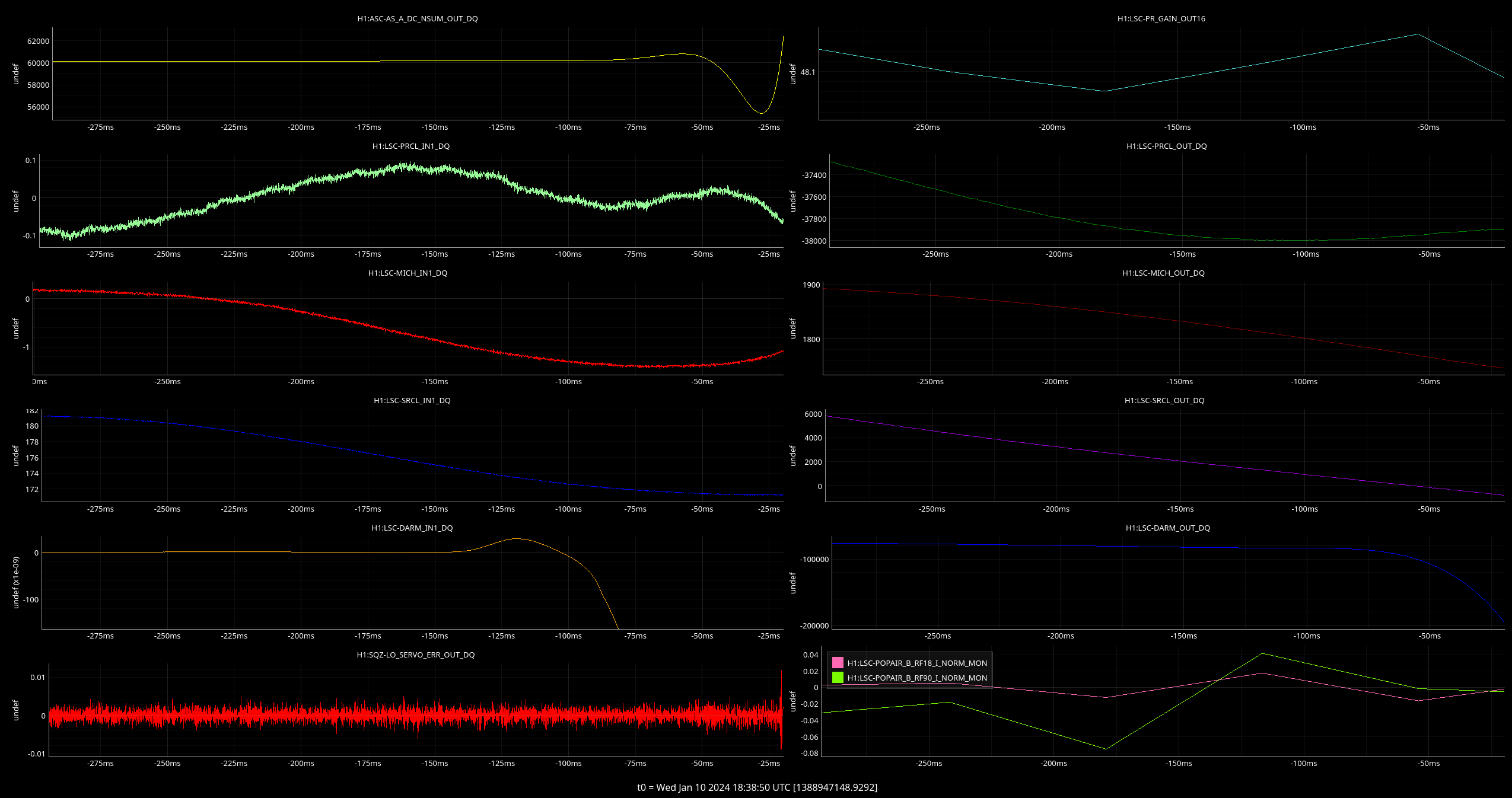
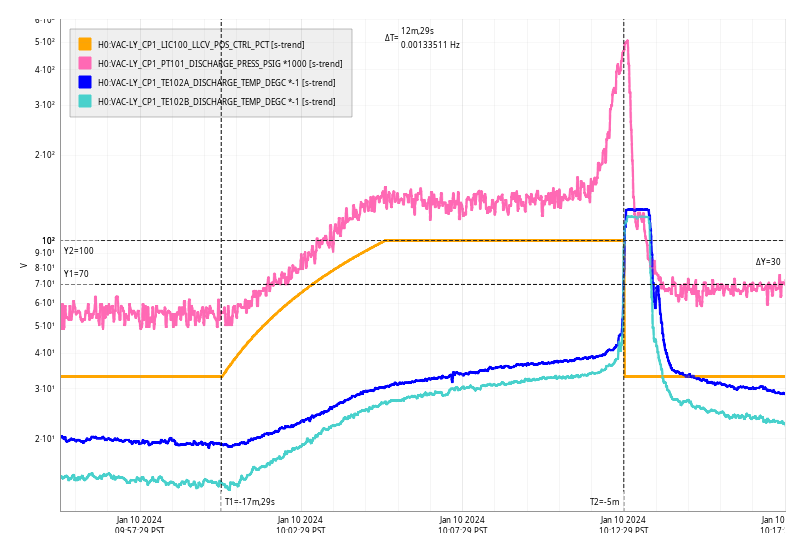
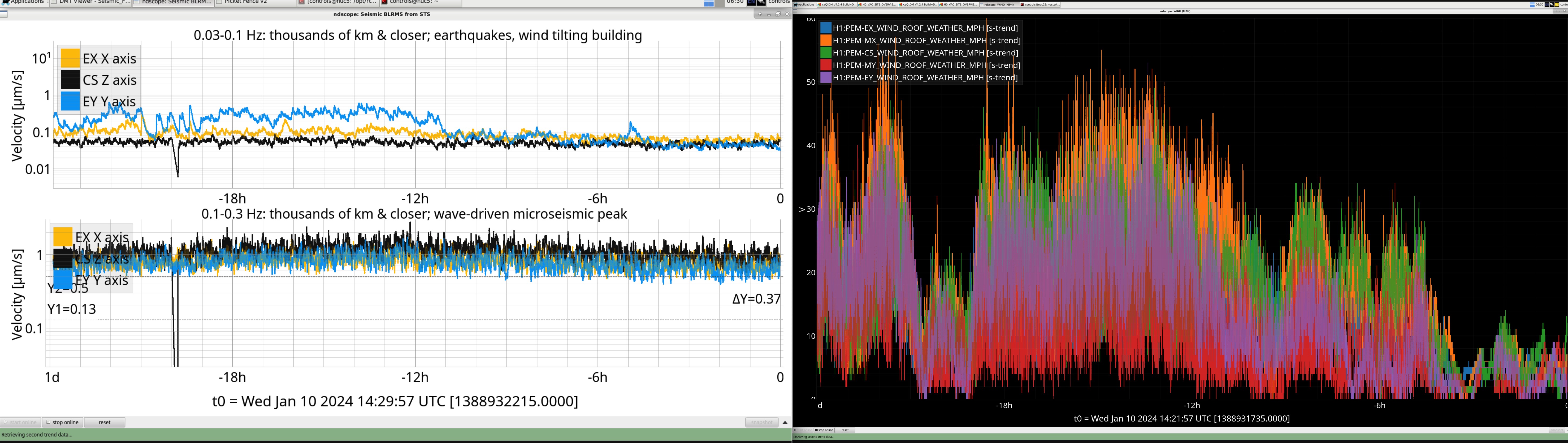
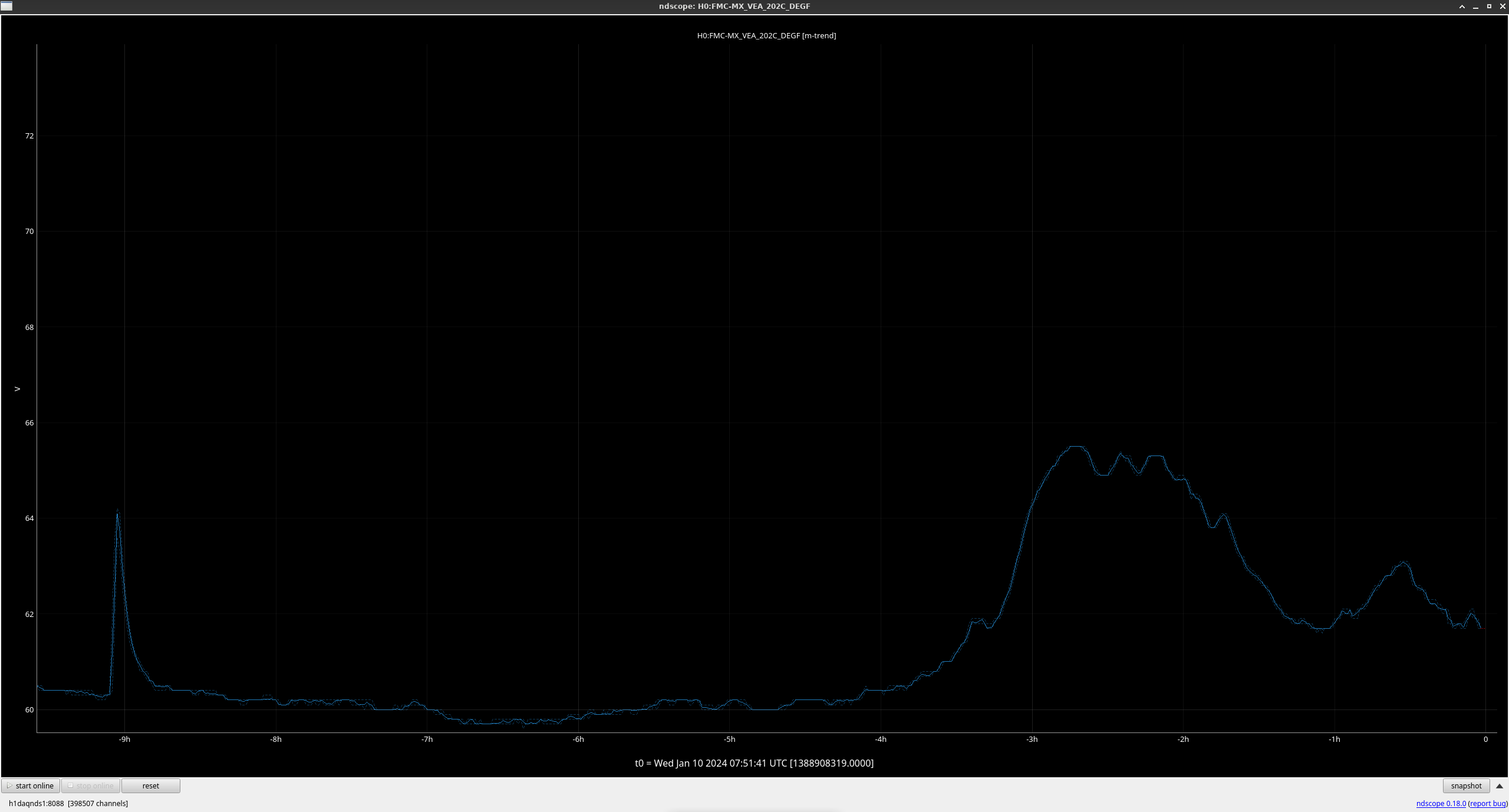
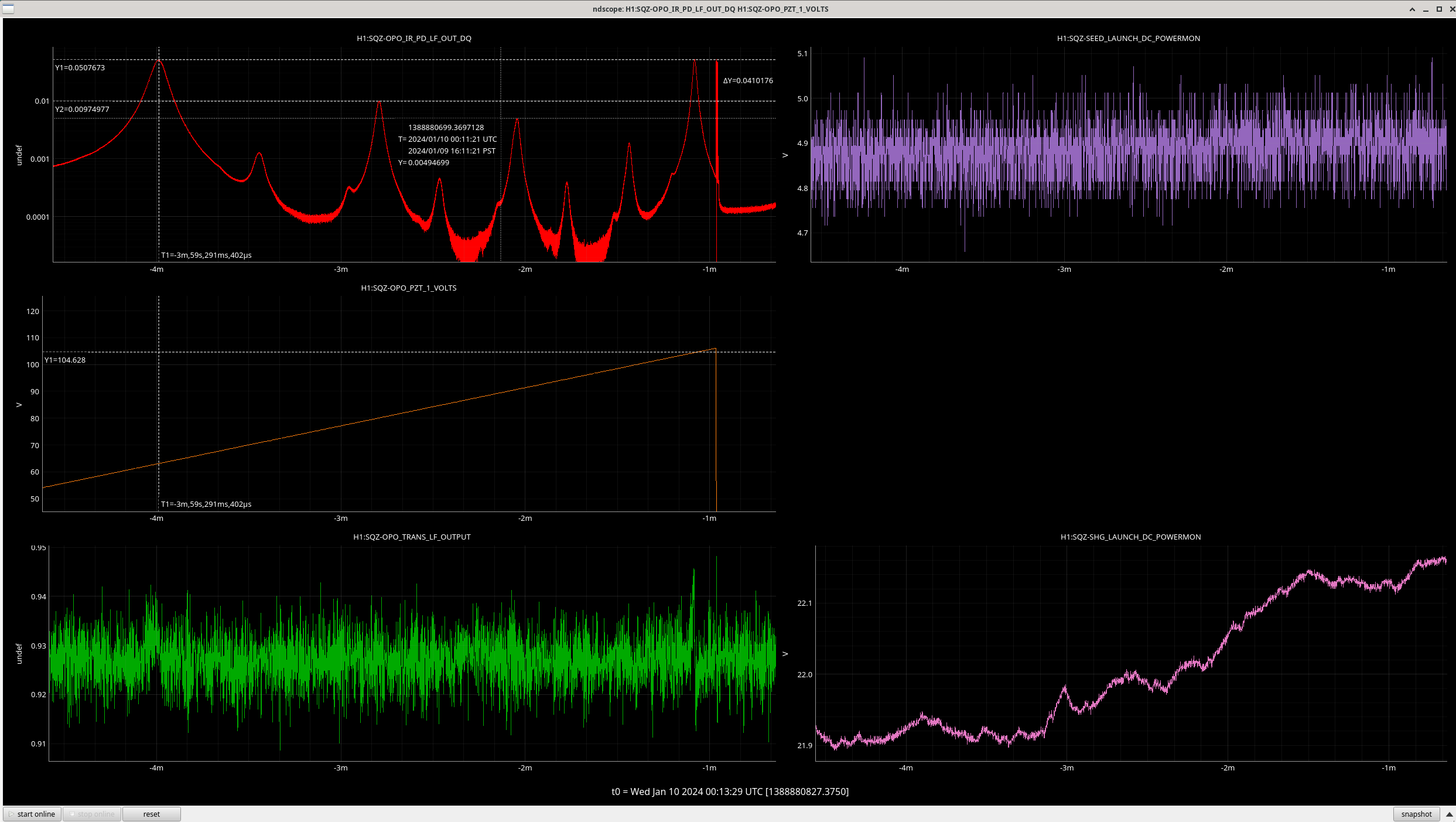
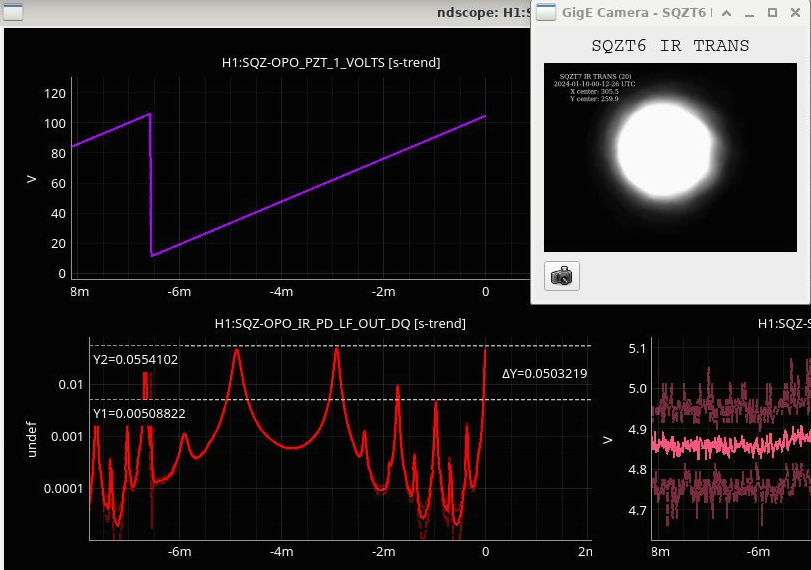
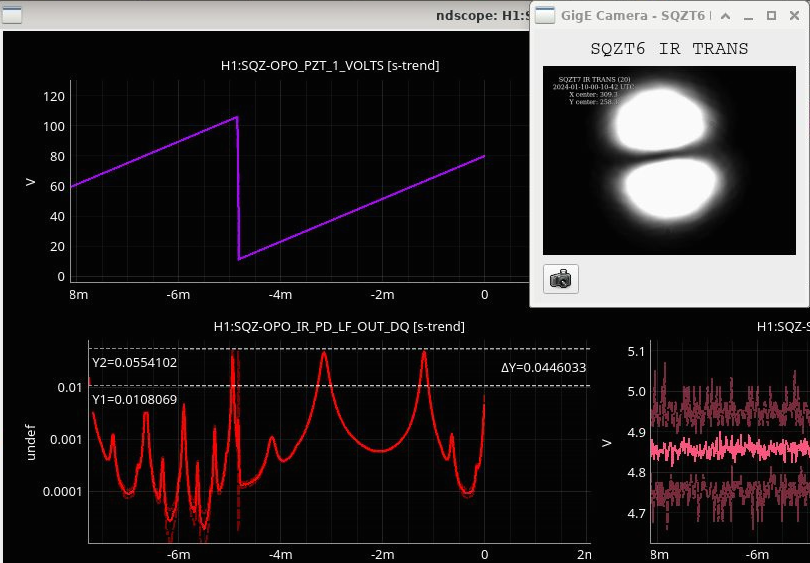
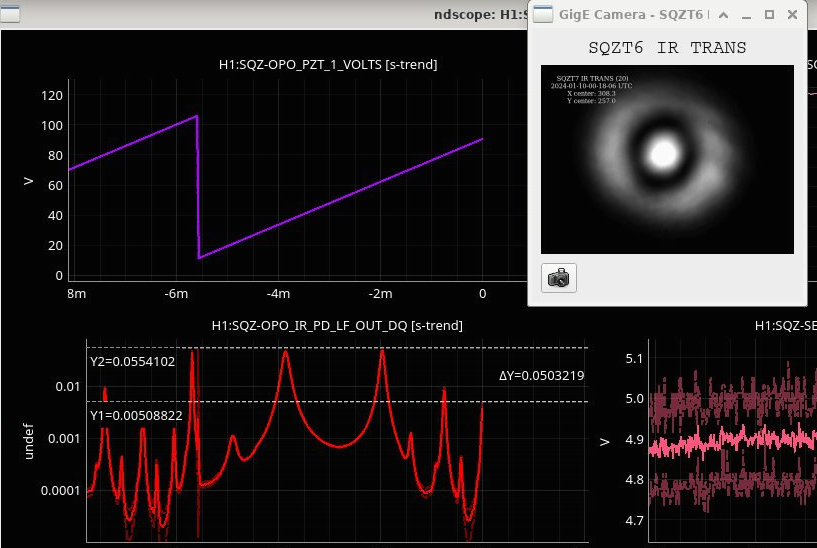
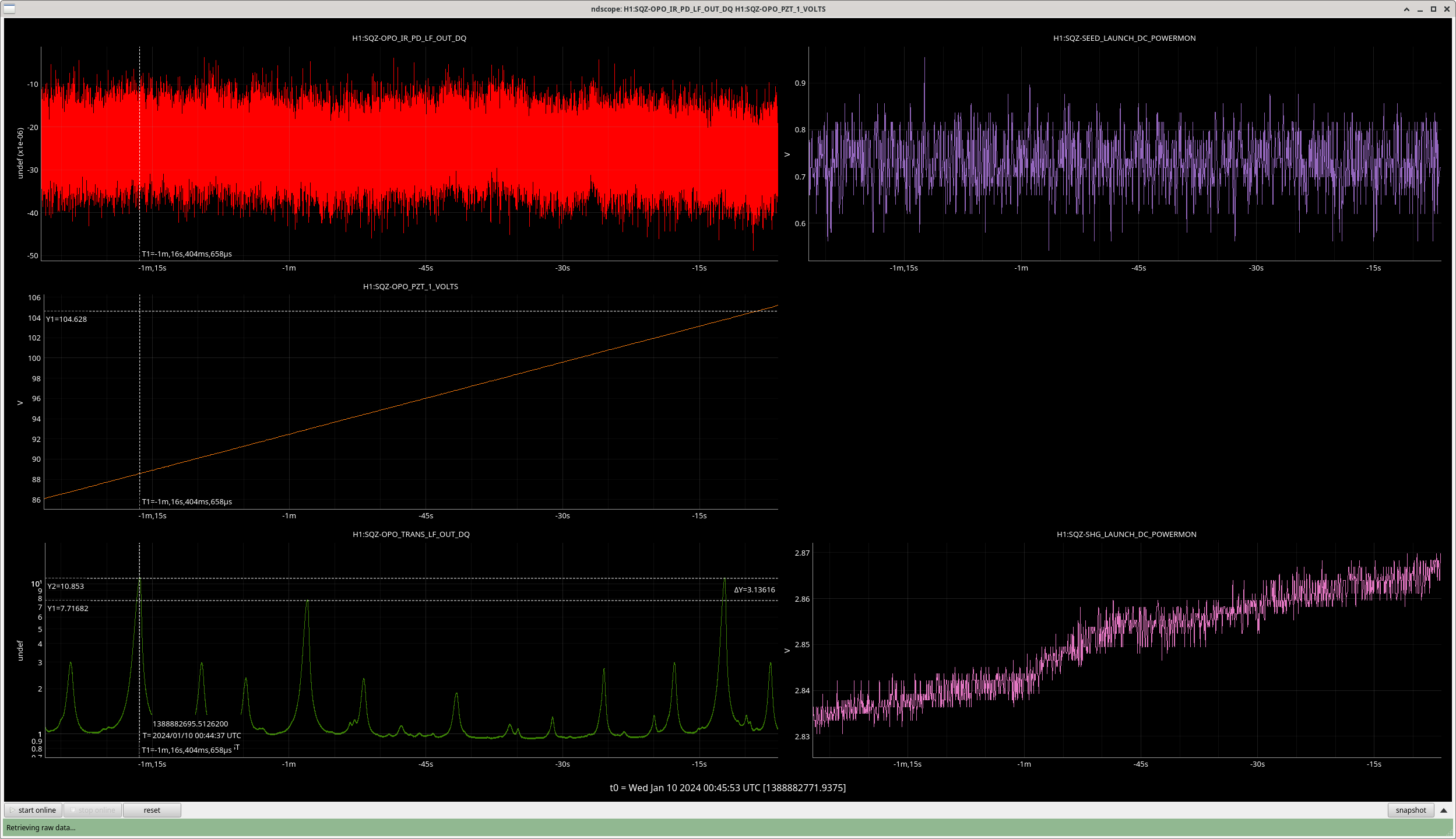
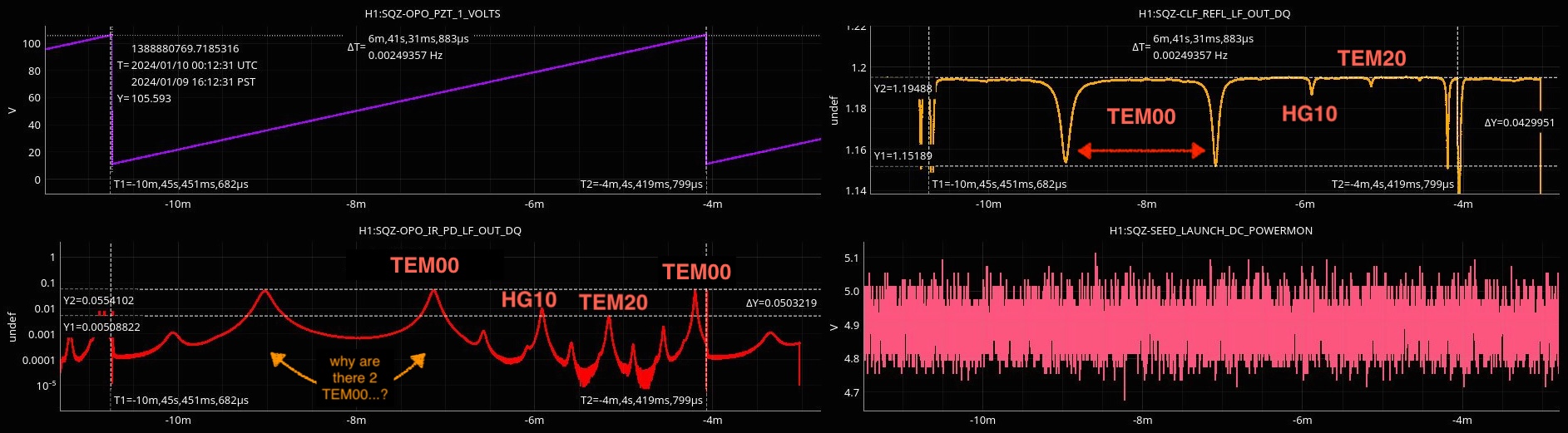
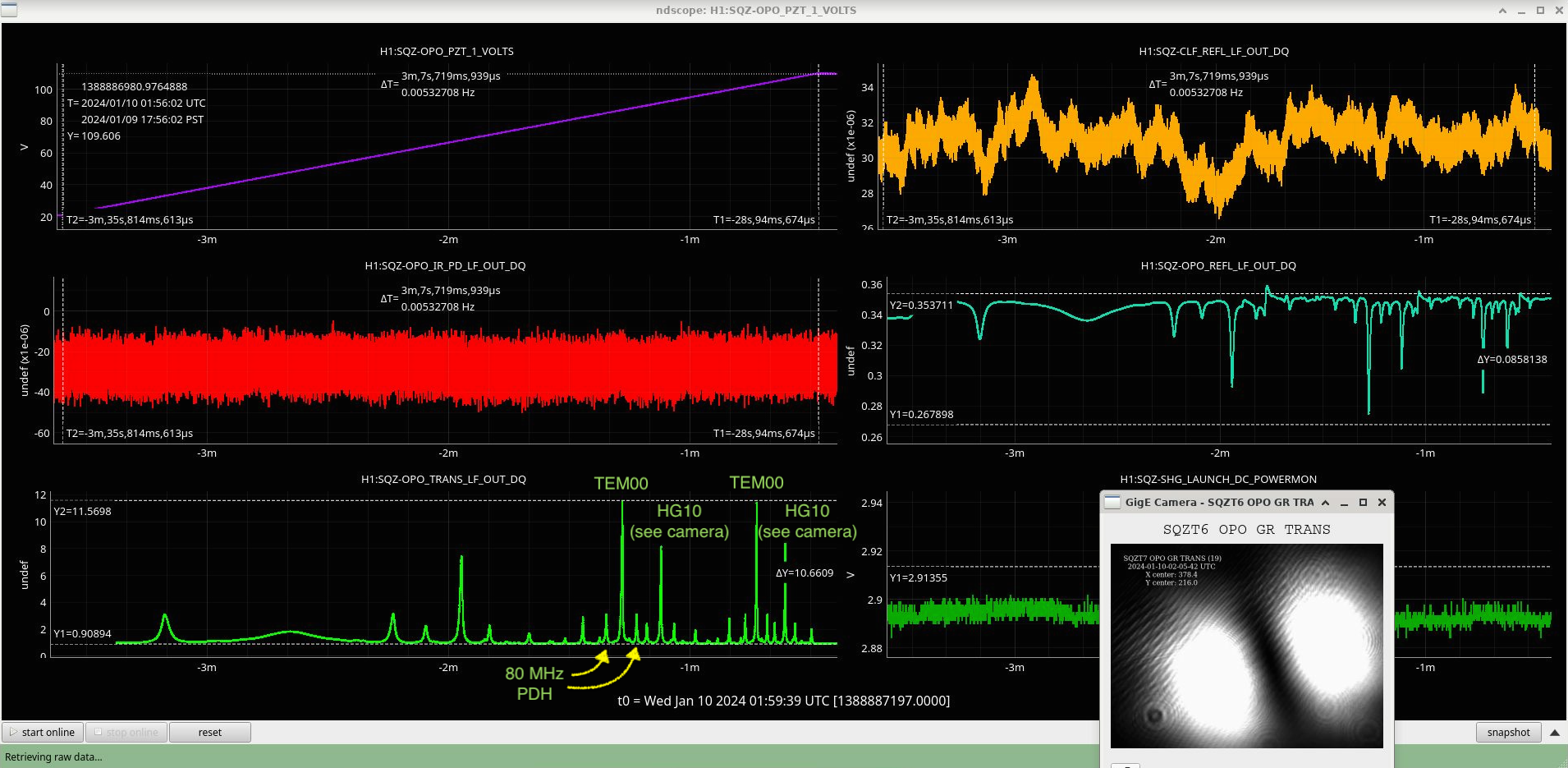
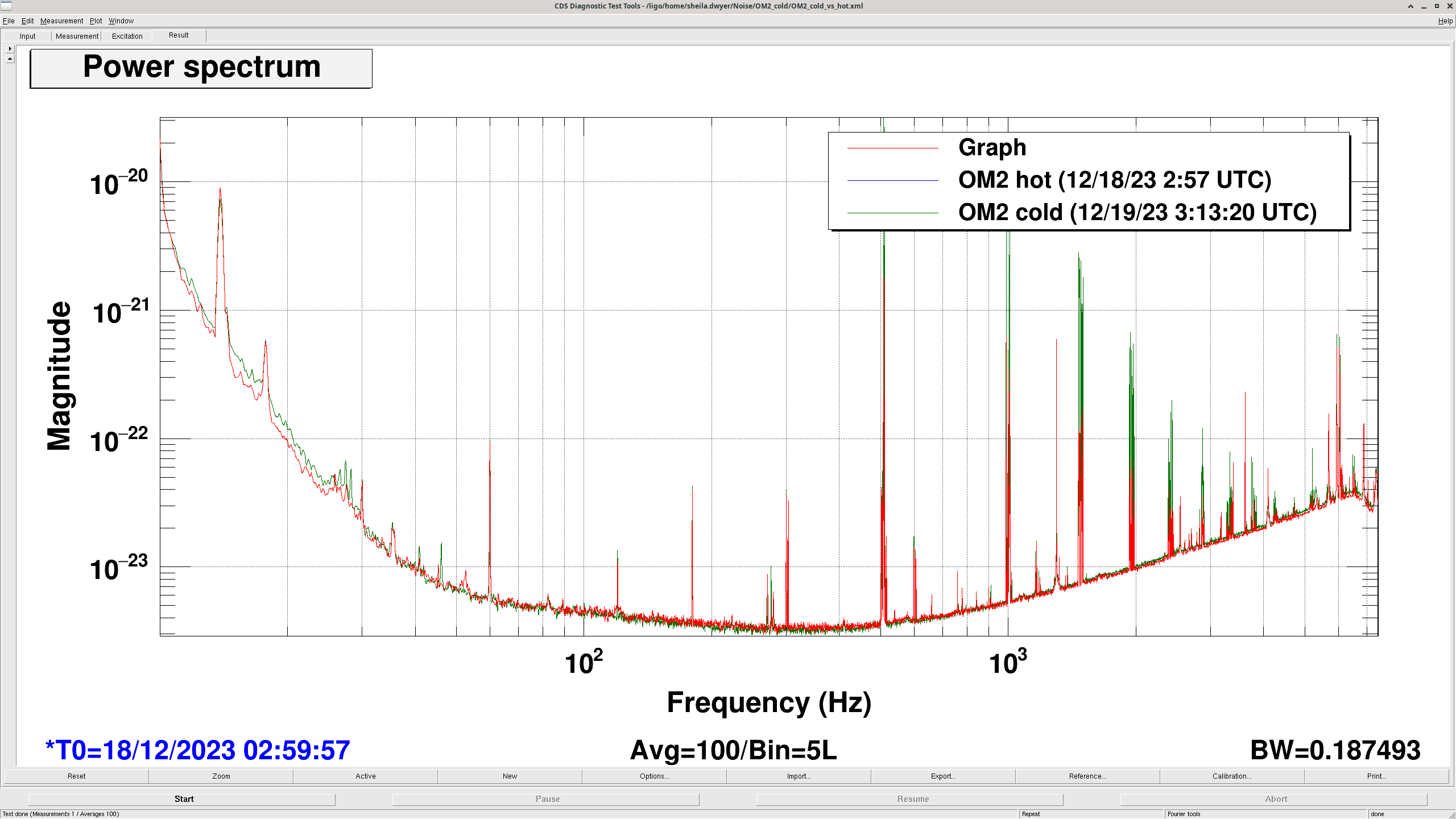
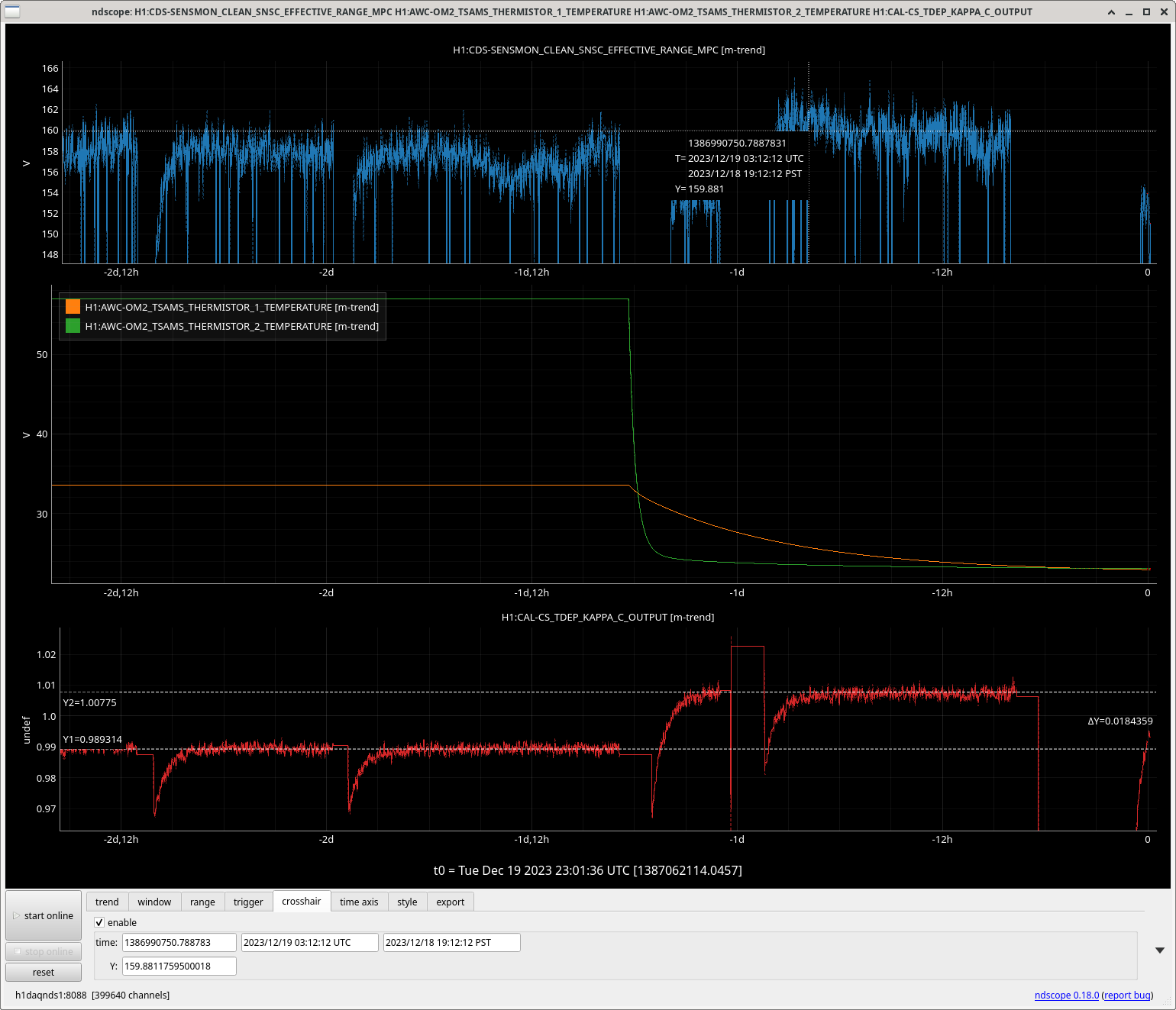
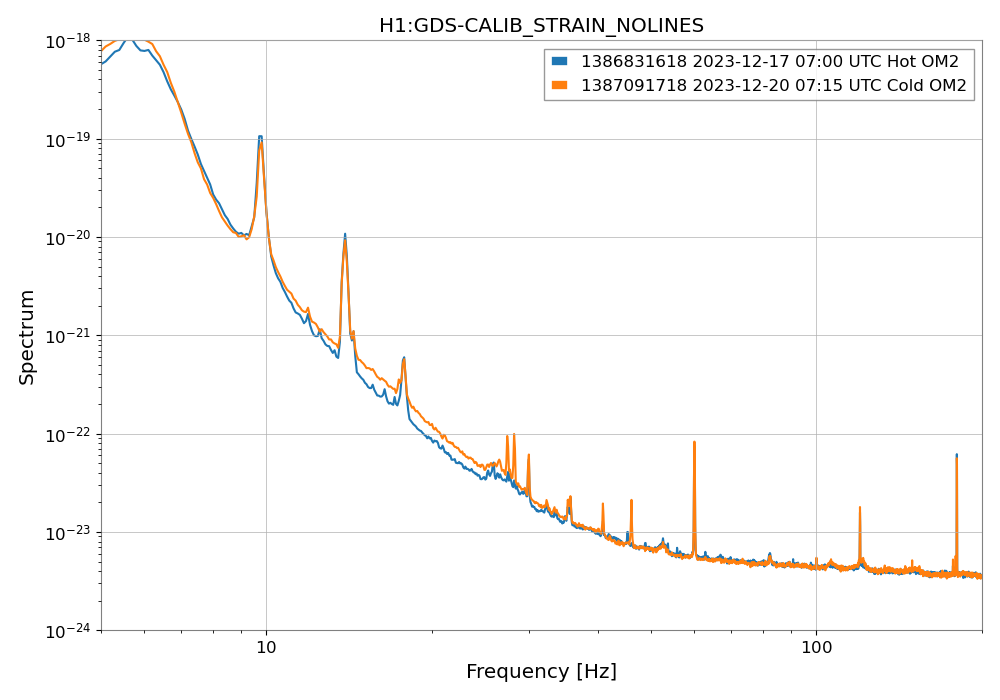
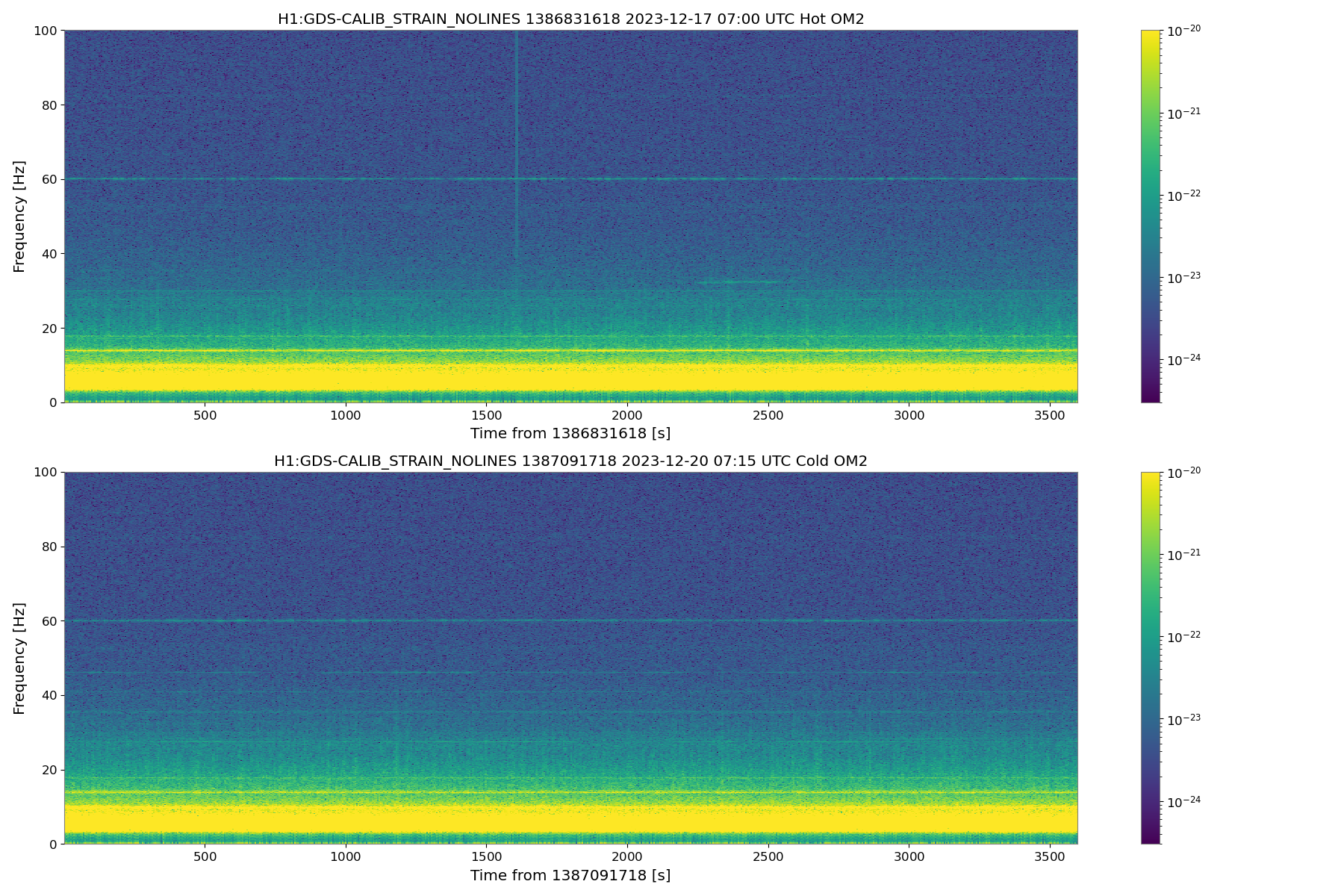
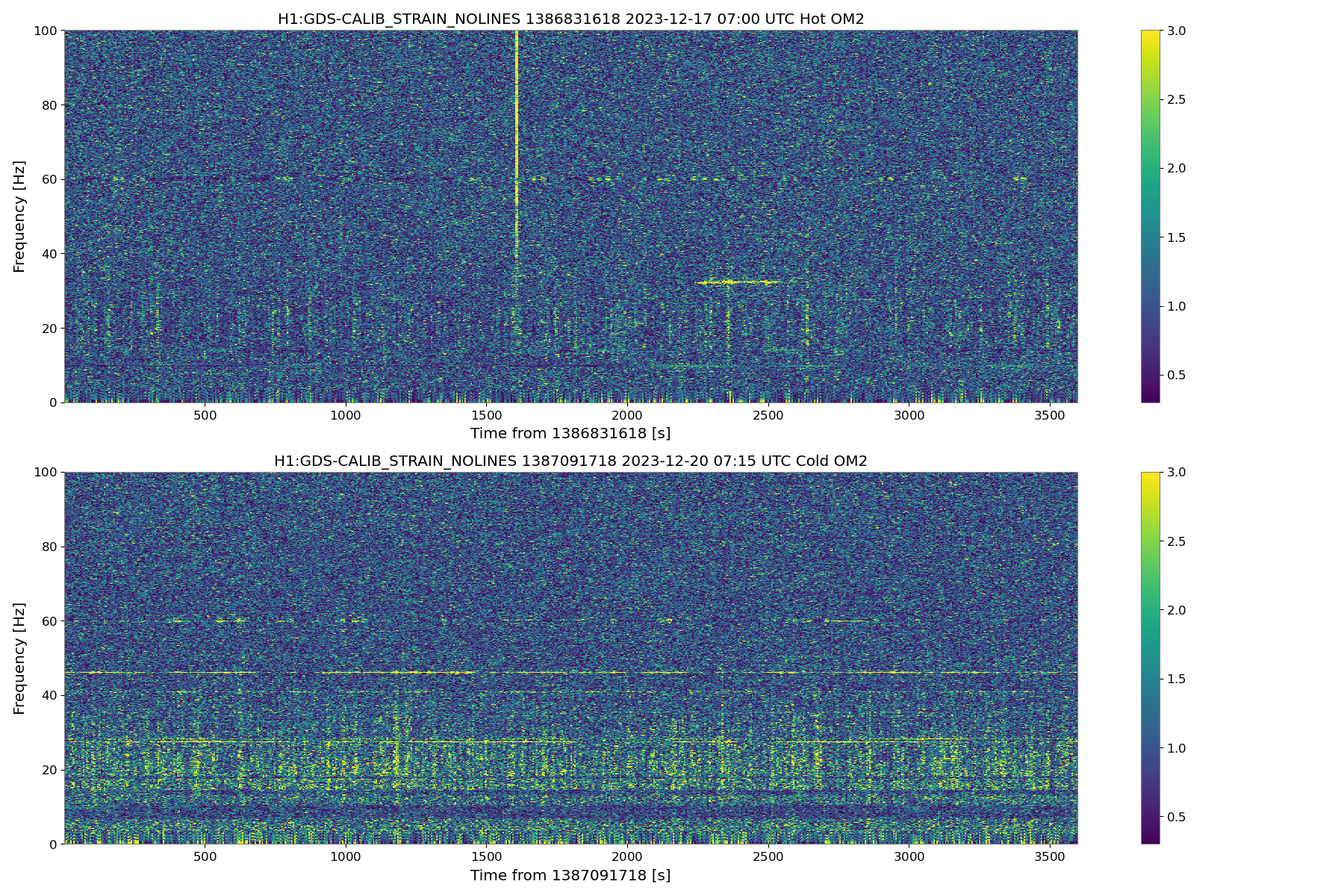
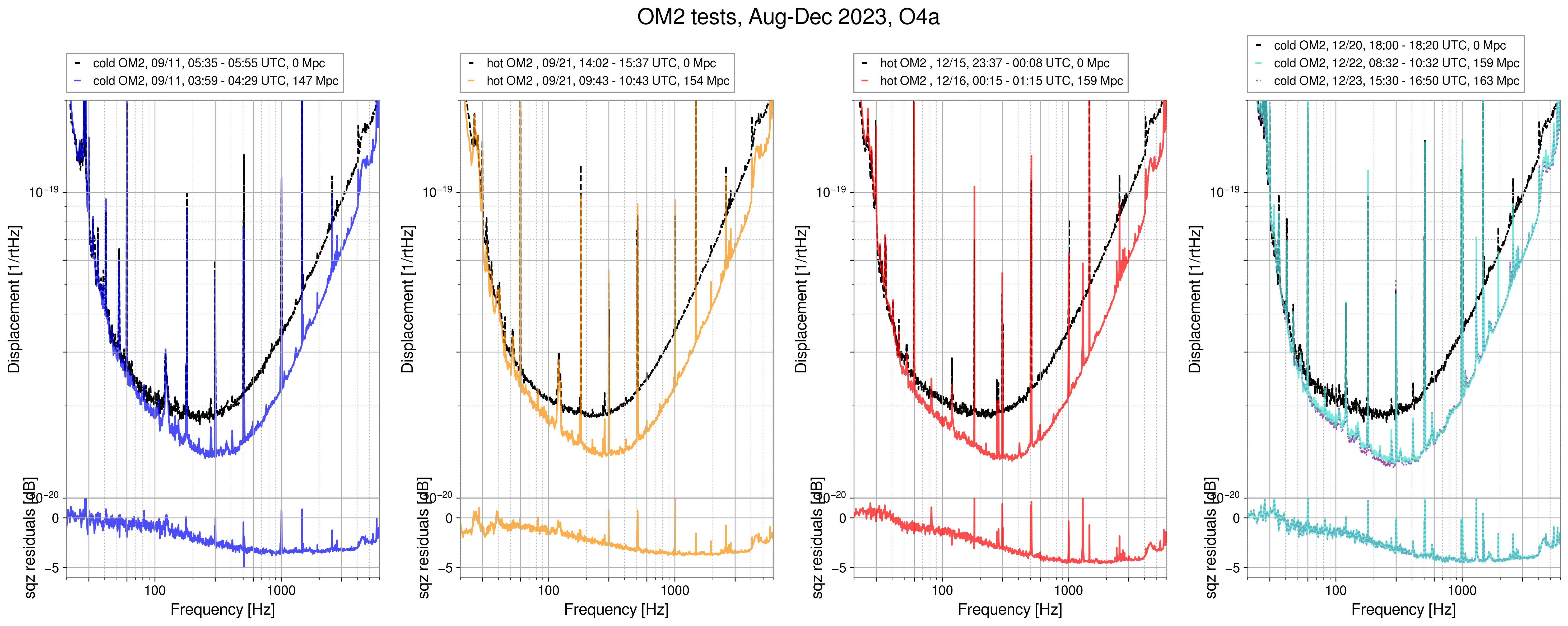
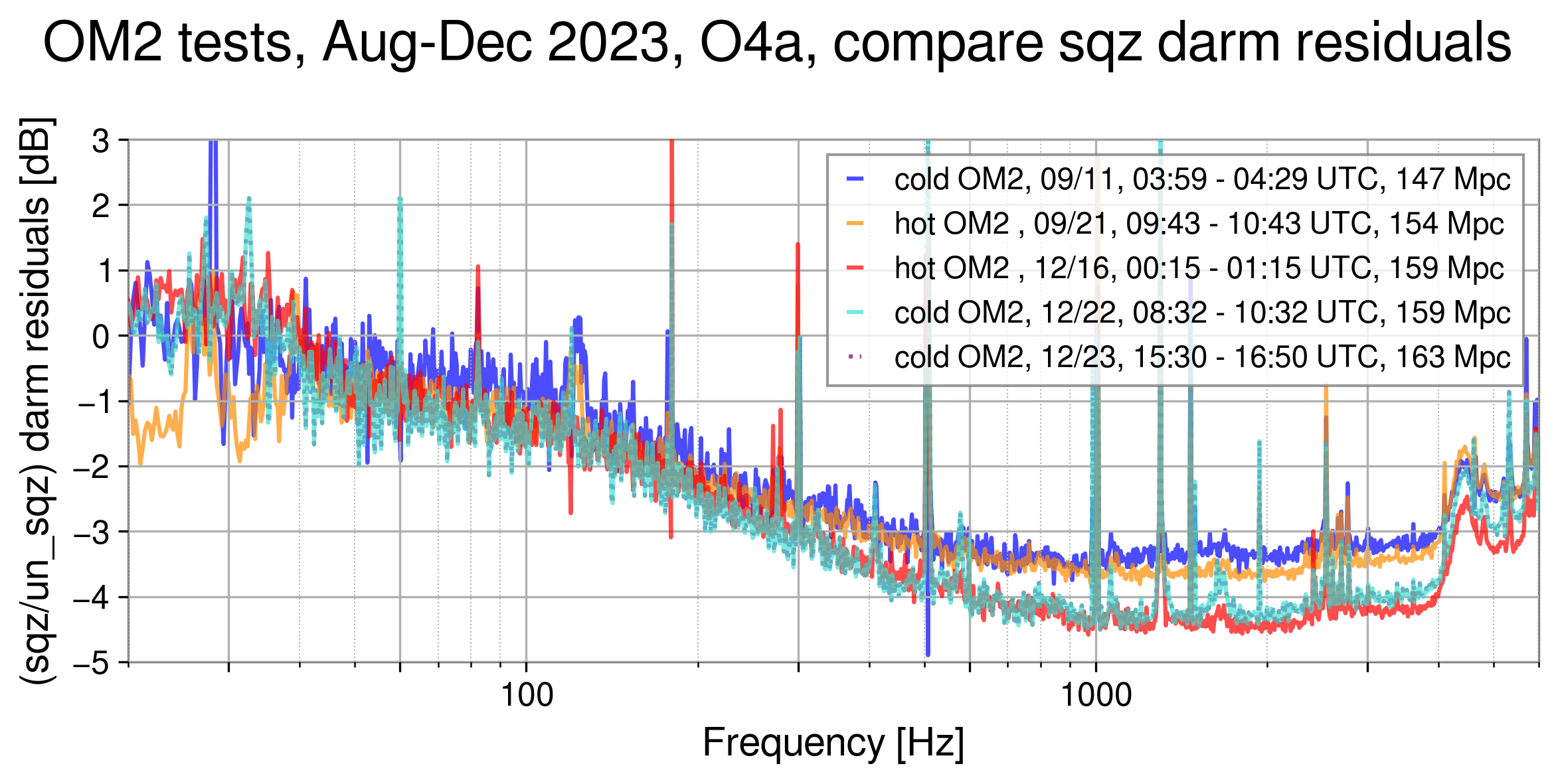
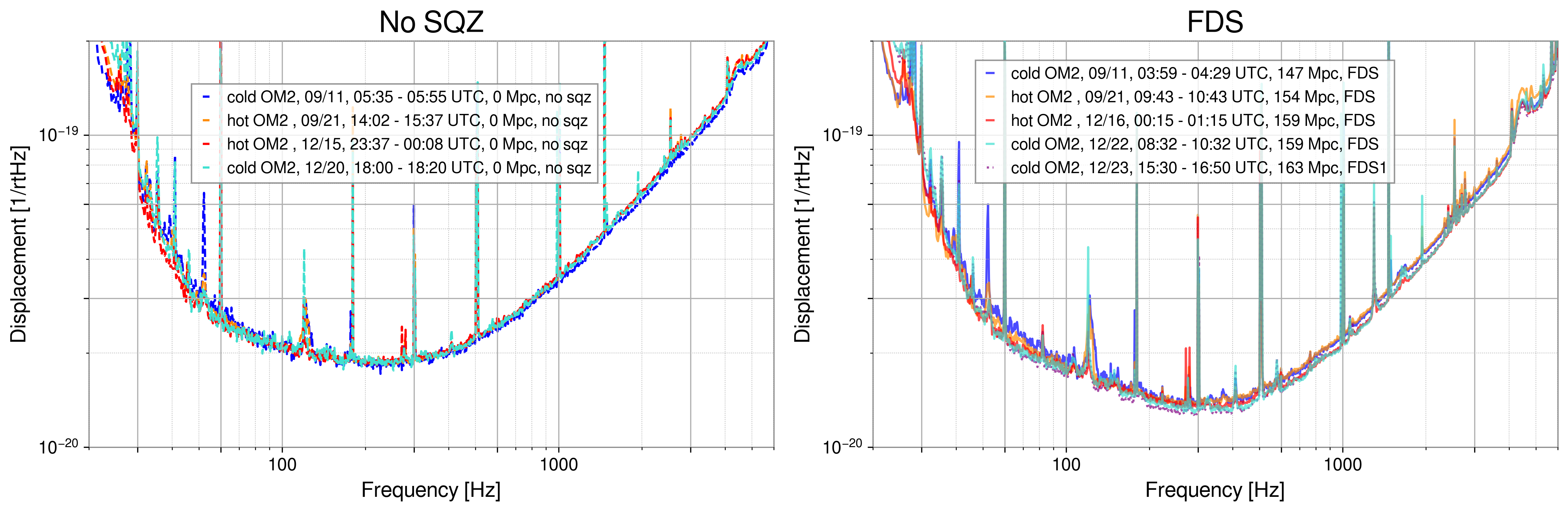
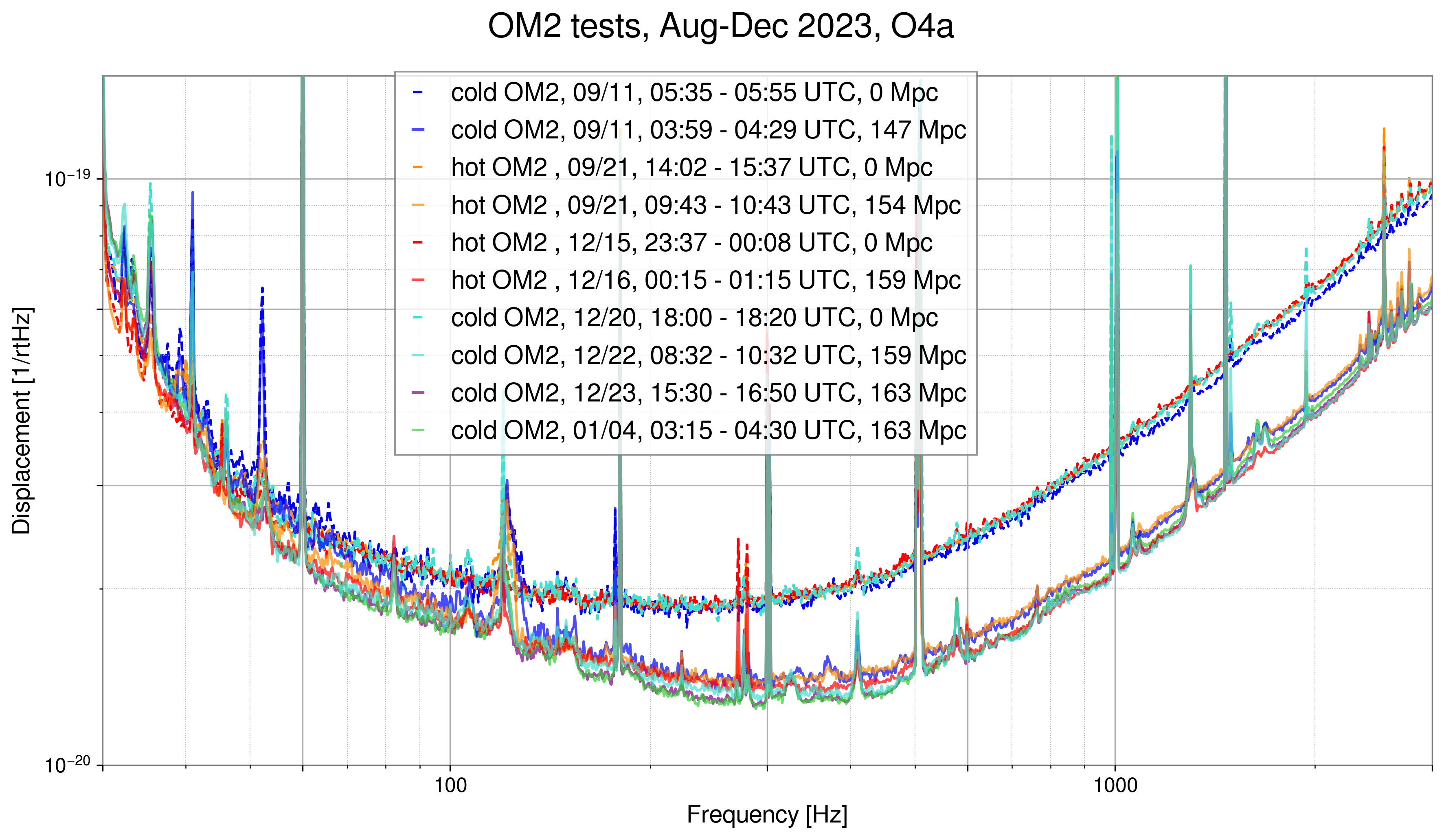
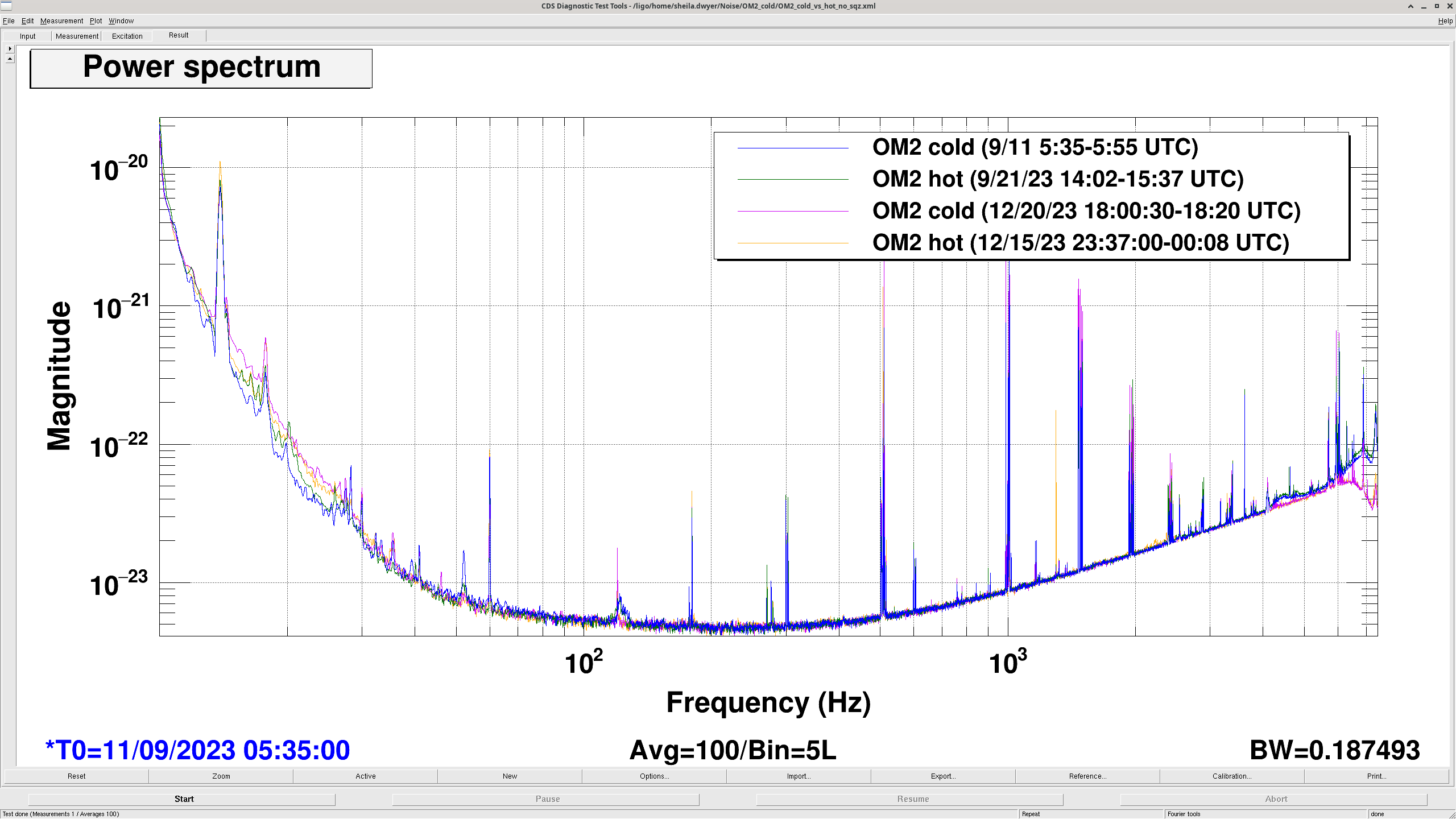
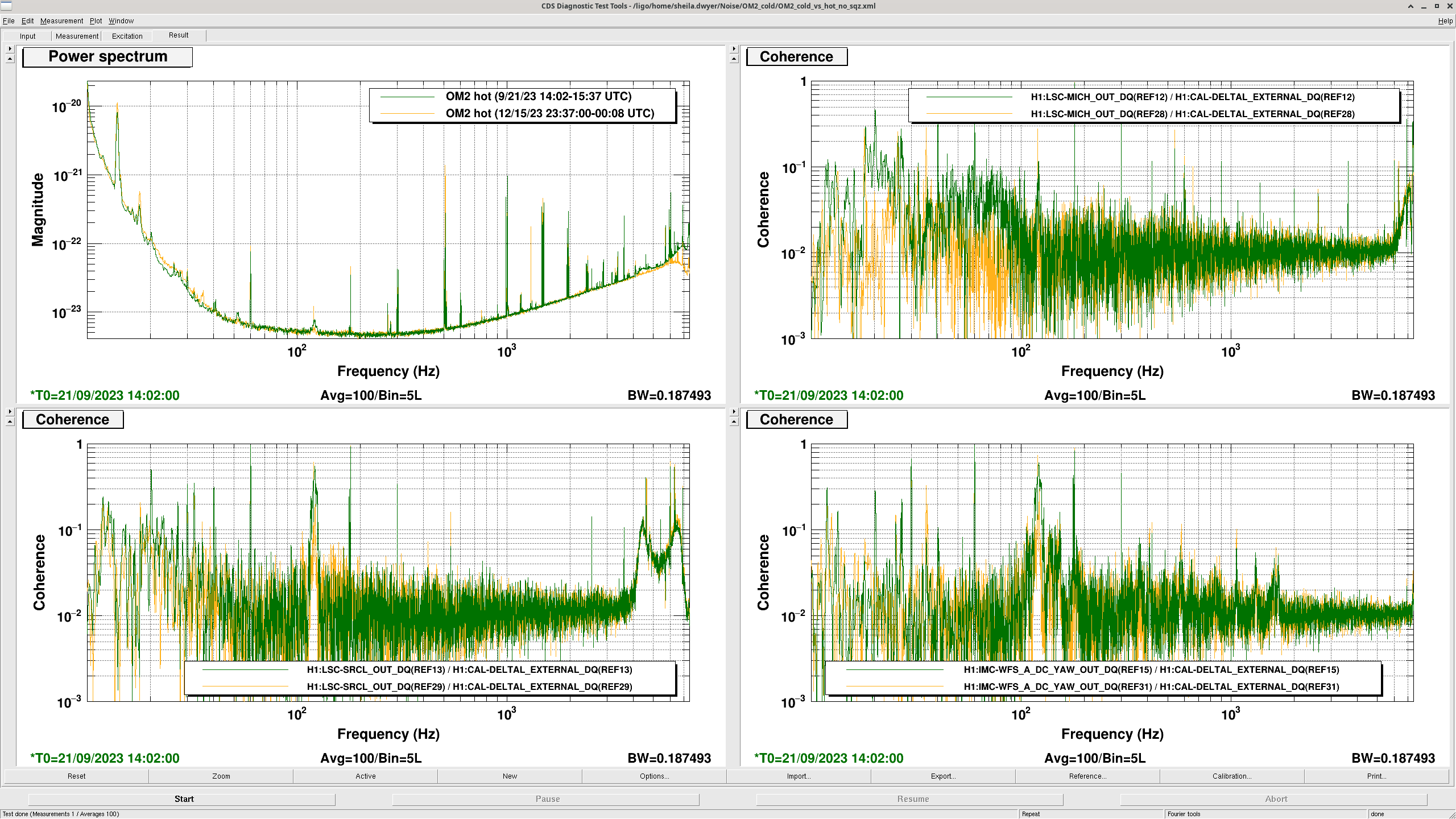
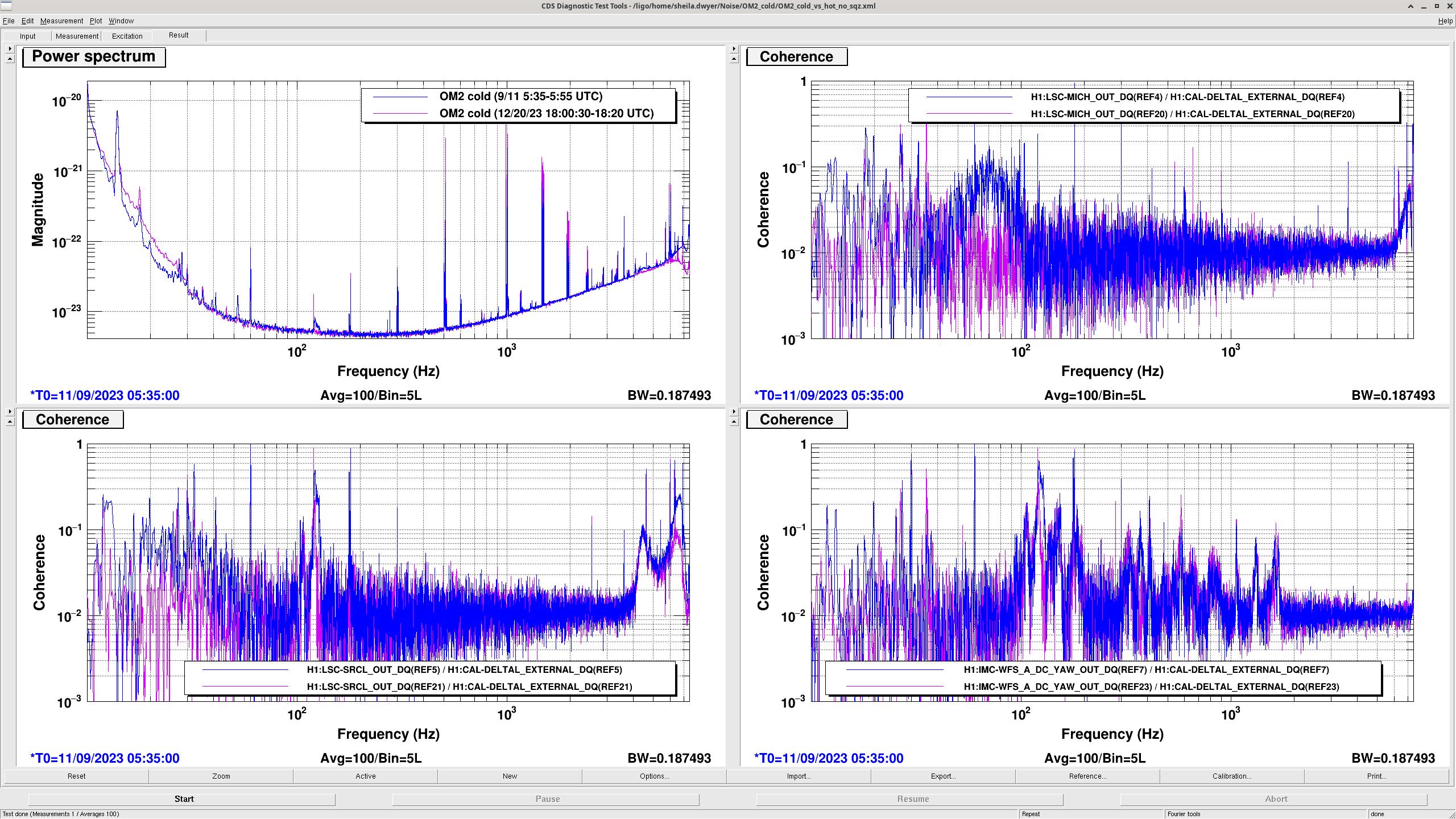
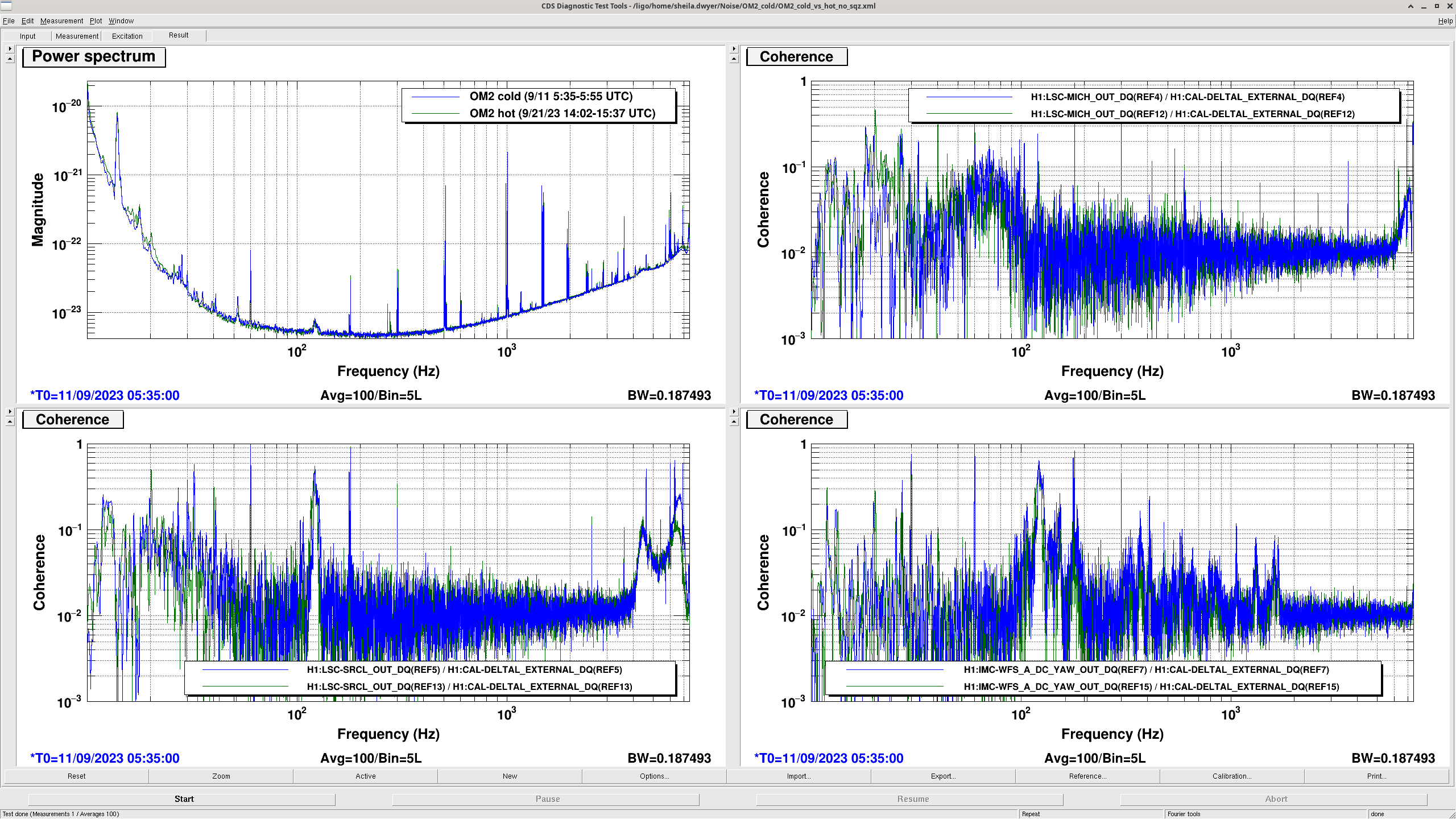
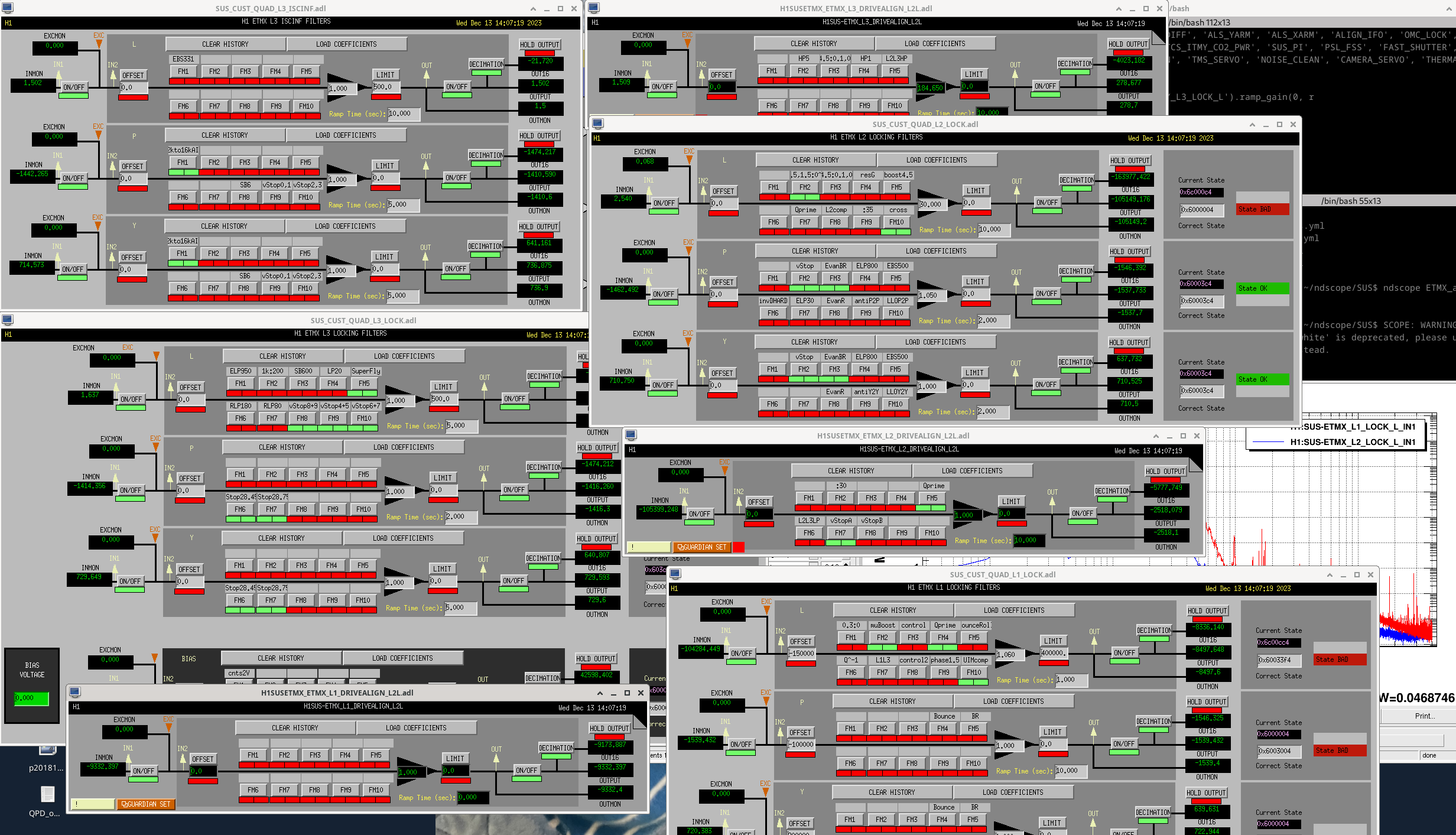
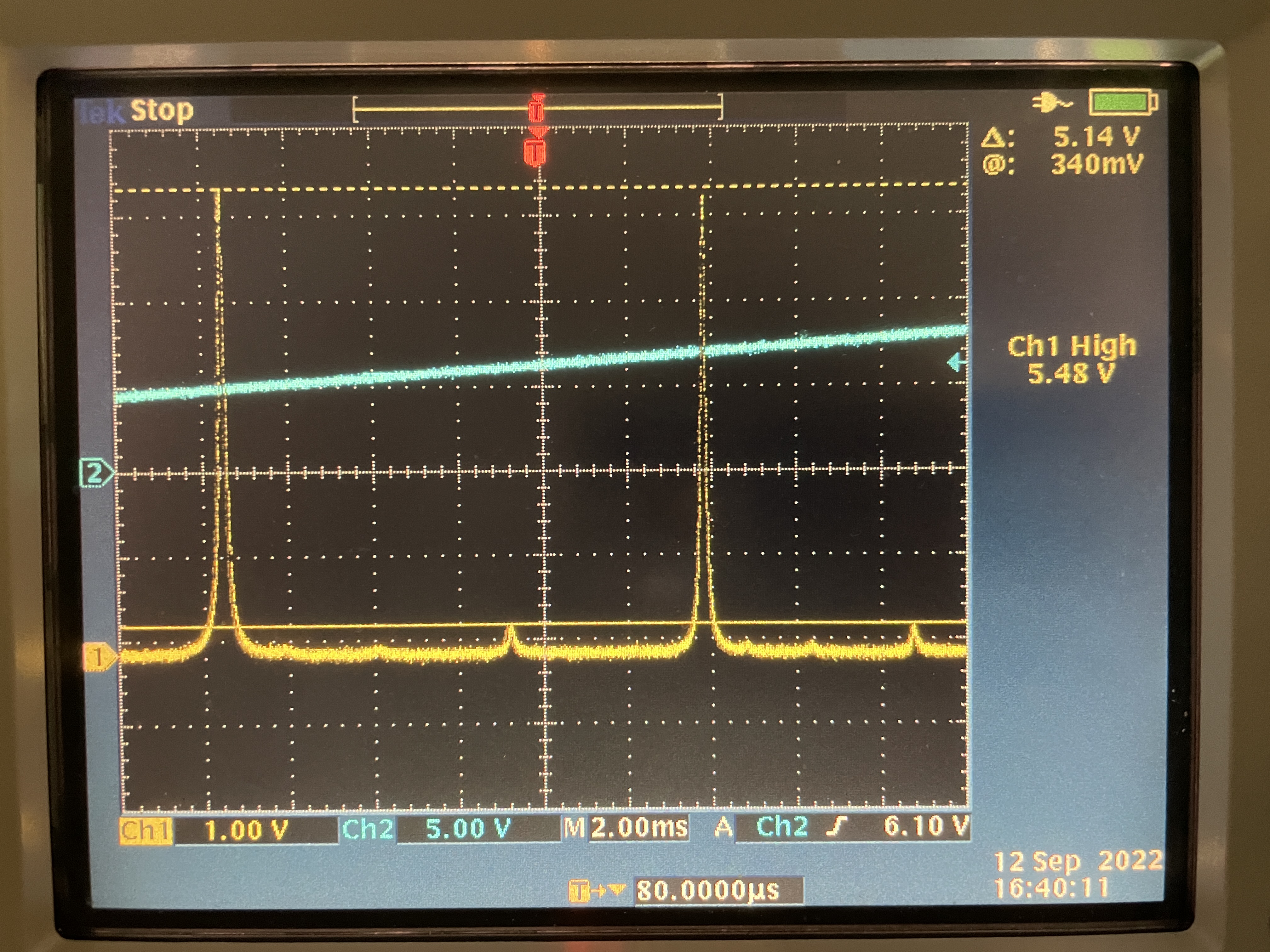
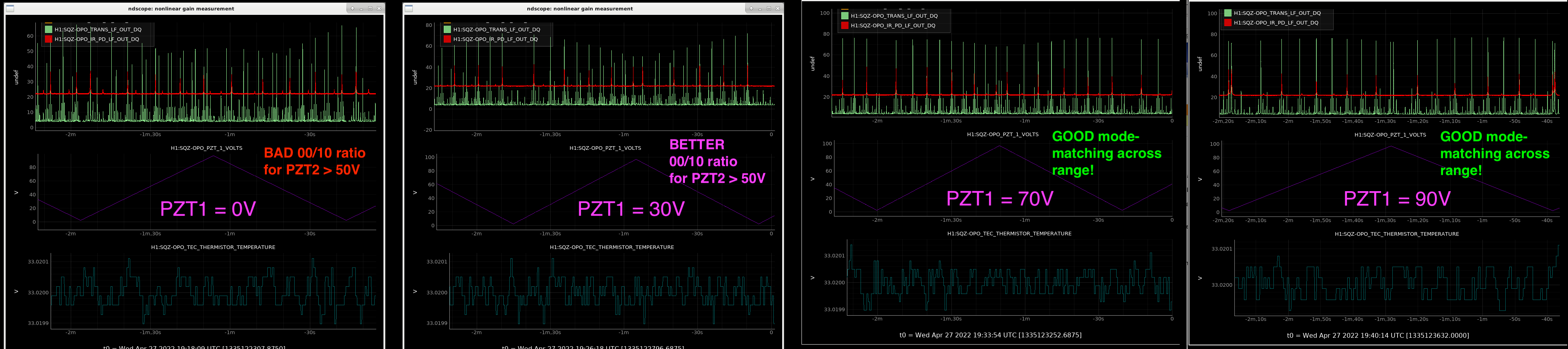
Both ETM RH turned up from 1.0W to 1.1W/segment at 19:03UTC, plan to increase another 0.1W later this afternoon. Follow on from 73437. Will stay in observing during this test.
Naoki, Vicky
Before homodyne work in alog73365, we forgot to offload the FC/SQZ ASC offset and save ZM sliders for IFO which changed with ZM6 offload in alog73171. This is why we failed to come back to the original ZM position after the homodyne work as reported in alog73388. Although we can offload the FC/SQZ ASC offset and save ZM sliders by clicking the button, it would be convenient if the guardian could do it. For smooth transition between IFO and homodyne, we added a new path to offload FC/SQZ ASC offset and save/set ZM sliders for IFO/HD in SQZ_MANAGER guardian as shown in the attached figure. The ALIGN_HD state just returns True and does not do anything. If this path works, we could also add this path to go to SQZ_READY_HD state.
Fri Oct 13 10:08:11 2023 INFO: Fill completed in 8min 8secs
Jordan confirmed a good fill curbside.
Last weeks ring heater tests are listed below. Note that everything was reverted after each ~3 hour test.
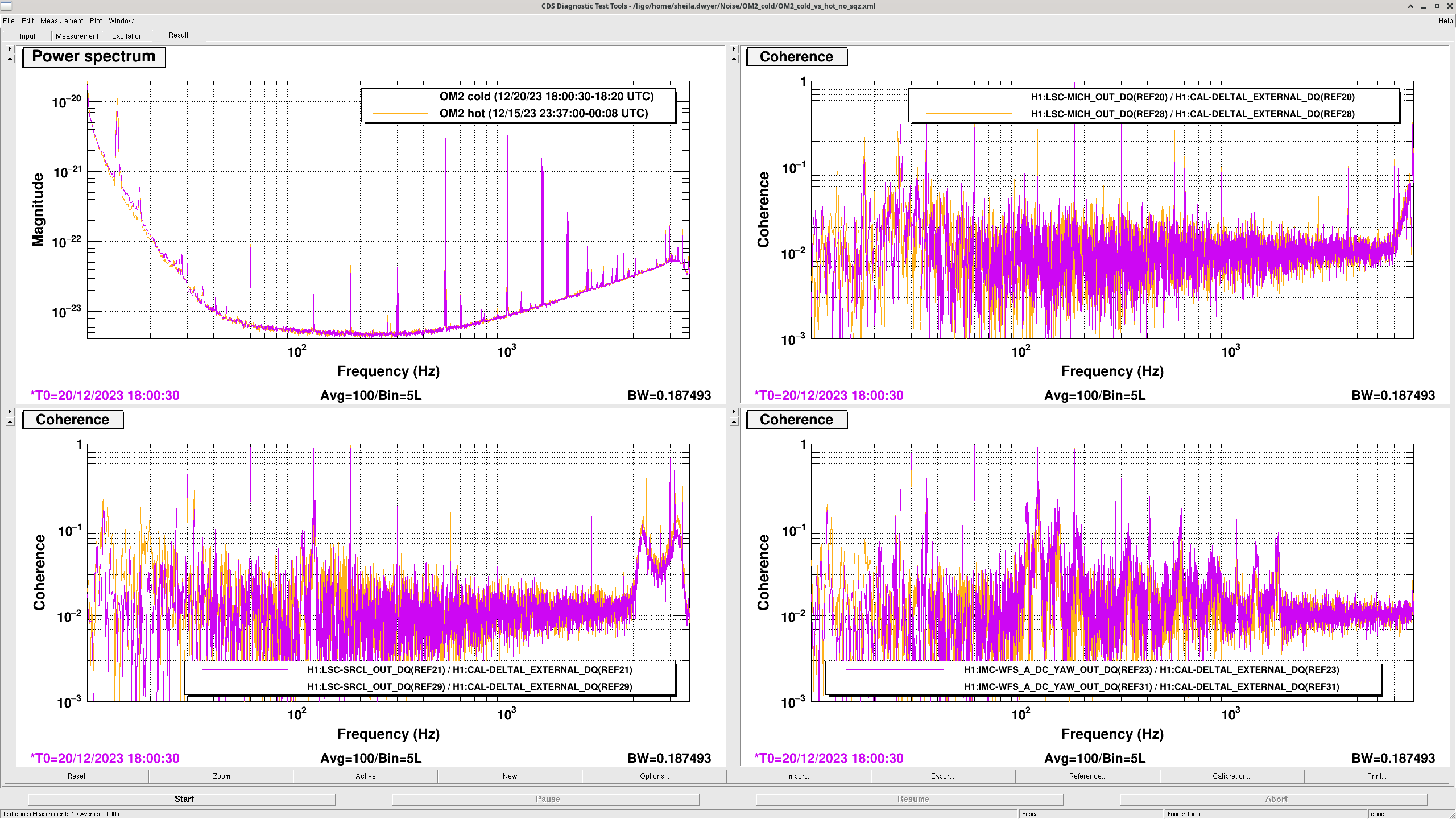
Current nominal settings are ITMX 0.44W, ITMY 0W, ETMs both 1.0W.
| Date | Test (W/segment) | Effect | Kappa_C | Circulating Power | Range |
| Fri 29 Sept 73093 | ETMX +0.1W, ETMY -0.1W | Range and squeezing got worse. | Up 0.3% | Down 1kW | Down 3Mpc |
| Wed 4 Oct 73272 | ITM RHs +0.1W, ETM RHs -0.1W | High frequency noise increased. | No Change | Up 1kW | Down 5Mpc |
| Thurs 5 Oct 73289 | ETM RHs +0.1W | 52Hz noise in DARM shows an increase (does fluctuate). High frequency noise slightly decreased. Might try more in this direction. Remade DARM plot, attached. | Down 0.3% | Down 3kW | No Change |
| Fri 6 Oct 73308 | ITM RHs +0.05W | High frequency noise increased. | Down 0.2% | Down 1kW | Down 4Mpc |
I noticed that the dust monitor alarm levels were very low this morning and looked like they had been reset, the most recent alog I could find mentioning a restart for the dust monitor processes was in alog73120, a few weeks ago. I reset the alarm levels following DCC E1600132 for the following dust monitors: LVEA 6 & 10, PSL 101 & 102, the rest of the DMs levels were still set to their correct levels.
Tyler, Fil, Richard, Robert
I have been looking for the source of the several peaks at harmonics of 13.1 Hz in DARM. These started or got worse on a past Tuesday. So I tried backing out the ITMX oplev and the CER grounding activities that took place that day, but to no avail. I had noticed that there was a large acoustic peak in the CER that might be the source (its hard to tell because the peaks are broadened in DARM by bilinear coupling). I tracked this acoustic peak to AC-1 in the CER. Today we shut it down, and it turns out that this AC was the problem and the appearance of the peaks on a Tuesday was probably coincidental.
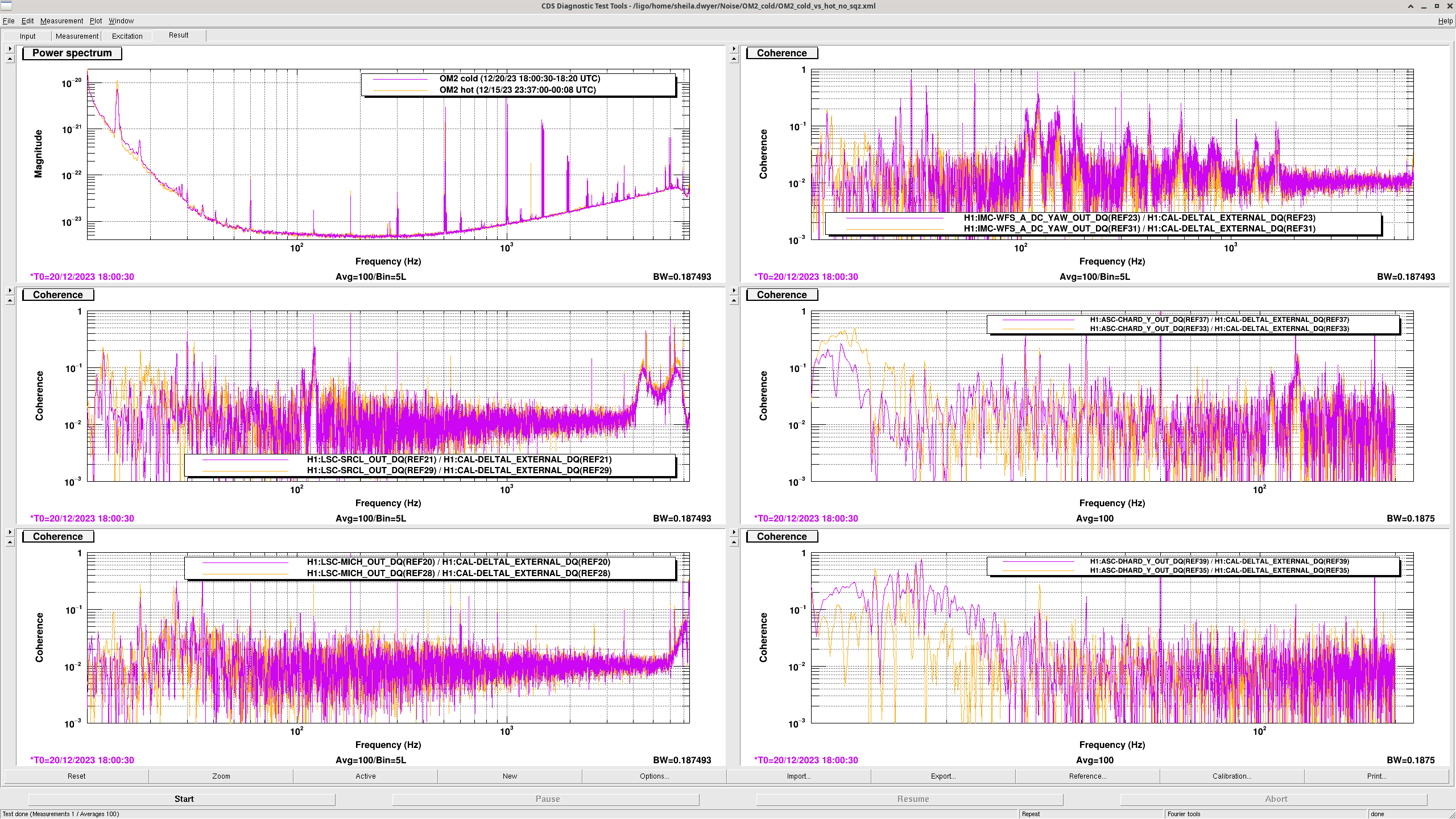
The figure shows that the DARM peaks go away when AC-1 is off, and we have left this AC off to improve DARM. We also shut down all six ACs a couple of times for a test, and DARM spectra for the tests are also shown in the figure. The AC that we shut off makes the biggest difference, but the rest of the ACs also appear to increase the noise slightly in the 50-80 Hz region.
I will revisit this some tomorrow, now that Camilla, Jenne, et al. have significantly improved the feed-forward and the range (this afternoon after the figure plots were made). I will also be looking more into the coupling mechanism.
The second figure compares summary page DARM spectra showing that the improvements held overnight.
I don't see anything noteworthy in the lockloss scopes from the previous lockloss this morning. The relock was fully automated.
TITLE: 10/13 Day Shift: 15:00-23:00 UTC (08:00-16:00 PST), all times posted in UTC
STATE of H1: Observing at 149Mpc
OUTGOING OPERATOR: Corey
CURRENT ENVIRONMENT:
SEI_ENV state: CALM
Wind: 2mph Gusts, 1mph 5min avg
Primary useism: 0.02 μm/s
Secondary useism: 0.17 μm/s
QUICK SUMMARY:
Update on outbuilding weather station restarts: After over a week of having to daily restart the mid and end station weather station IOCs at 4am for a failure in the previous hour, the last time we had to do this was Mon 9th Oct. This is similar to what happened in early January this year, for about a week the weather stations stopped updating around 03:20 in the morning, and then the problem went away by itself.
I did another round of serching h0epics's log files, crontab, anacron, etc. but found nothing which would cause this.
Decreased range in the IFO this morning vs last night appears to be due to DARM above ~200Hz. This shows up in the SQZ BLRMs too, attached plot. Today the PRC has 0.15W less than yesterday, but this is a normal fluctuation. Nothing has changed in the TCS system.
In response to Camilla's finding, and for her RH tests right now 73445, we have changed the sqz angle by changing the CLF DEMOD RF6 phase from 150 to 142. Blue BLRMS_5_DB_MON at 1.7 kHz improved maybe 0.5dB.
TITLE: 10/13 Eve Shift: 23:00-07:00 UTC (16:00-00:00 PST), all times posted in UTC
STATE of H1: Observing at 159Mpc
INCOMING OPERATOR: Corey
SHIFT SUMMARY: H1 has been locked for 25 hours. Some commissioning time and one earthquake passing through, otherwise a quiet evening. DIAG_MAIN went into error several times as I was testing a new checker, which has not yet been implemented.
LOG:
| Start Time | System | Name | Location | Lazer_Haz | Task | Time End |
|---|---|---|---|---|---|---|
| 23:46 | PEM | Robert | CER | - | AC on/off tests | 00:40 |
| 00:56 | FIT | Dorotea | MY | - | Running | 01:27 |
FAMIS 26061, last checked in alog 73130
The coefficientplots.py script used to generate the plots is still having problems with matplotlib; one workaround is to use the cds-py39 environment before running it with "conda activate cds-py39"
H1 has been locked for 21 hours and observing for the past 2.5 hours, range at 157Mpc.
Quiet evening so far after commissioning wrapped up; inspiral range is looking good after the LSCFF adjustments (see alog 73428).
H1 dropped observing at 23:22 UTC for commissioning while L1 is still down.
H1 is back to observing as of 00:30 UTC
TITLE: 10/12 Day Shift: 15:00-23:00 UTC (08:00-16:00 PST), all times posted in UTC
STATE of H1: Observing at 150Mpc
INCOMING OPERATOR: Ryan S
SHIFT SUMMARY: Locked for 17 hours. Commissioning activities took up the morning, but we've been Observing since 12PT. Camilla and Jenne have been working on the LSC FF and have some new filters in place.
LOG:
TITLE: 10/12 Eve Shift: 23:00-07:00 UTC (16:00-00:00 PST), all times posted in UTC
STATE of H1: Observing at 148Mpc
OUTGOING OPERATOR: TJ
CURRENT ENVIRONMENT:
SEI_ENV state: CALM
Wind: 9mph Gusts, 6mph 5min avg
Primary useism: 0.03 μm/s
Secondary useism: 0.20 μm/s
QUICK SUMMARY: H1 has been locked for 17 hours and observing for most of the afternoon.
Jenne, Camilla
We've moved the LSC FF from ETMX to ETMY PUM and turned on the new LSC FF filters measured in 73393.
This has reduced noise above 50Hz but increased noise below 50Hz, plots attached of the FF and DARM, compare gold to pink. H1 range is simular.
We've left this configuration, edited ISC_LOCK for this to be the new nominal and accepted attached sdfs. We plan to work to iteratively improve the filters in the next few hours with a new set of measurements we took this morning ~18:40UTC.
Jenne and I re-fit new filters iteratively to using the measurements we took this morning and loaded new filters into MICHFF and SRCL1FF, sdf safe and observe accepted and ISC_LOCK updated. H1 range is up ~7Mpc, plot attached, thin line is without cleaning.
We are hopeful that now the LSC FF is driven on ETMY, it will not need to be tuned as often as won't be effected by changing charge ETMX.
Attached MICH excitation comparison (new trace is light blue) which shows we are putting in more MICH 20Hz that previously but this isn't visible in DARM. Note that during the day today Tyler/Robert has turned off fans, reducing peaks ~25, 40, 52Hz 73424.
We checked that these LSC FF filters are not injecting any low frequency noise into DARM.
Vicky, Regina, Naoki, Sheila
We took squeeze data with PSAMs on ZM4 and ZM5 both at 120V, and four squeeze angles. Summary screenshot here, with these trends of squeezed BLRMS. All of the following data was done with frequency dependent squeezing.
With ZM4/5 at 120/120 V, +/- mid squeeze have noticibly different misrotations across the band. In alog 71902 from Aug. 2 with PSAMS at 200/200V, we didn't see strong misrotations down to ~80 Hz. From FDS data on Aug 2, compare today's green/blue lines to the green and yellow +/- mid squeeze lines in this plot.
DTT saved at $(userapps)/sqz/h1/Templates/dtt/DARM/PSAMS_tests_Oct112023.xml
For reference, with ZM4/5 PSAMS at 200/200V (what we've been operating with in O4).
H1:AWC-ZM4_PSAMS_STRAIN_VOLTAGE 7.52377
H1:AWC-ZM4_PSAMS_DEFOCUS_MON_MDIOPTER 201.544
H1:AWC-ZM5_PSAMS_STRAIN_VOLTAGE 3.49813
H1:AWC-ZM5_PSAMS_DEFOCUS_MON_MDIOPTER -1030.69
I took more data with PSAMS ZM4/5 = 200V/200V, using the same injected sqz angles as above.
See comparisons of anti-squeezing and squeezing with PSAMS @ 200/200V (dotted lines) vs. 120/120V (solid lines).
Notes / thoughts:
BLRMS trends here. All traces saved to same DTT file, $(userapps)/sqz/h1/Templates/dtt/DARM/PSAMS_tests_Oct112023.xml
Vicky, Sheila, Regina, Dorotea
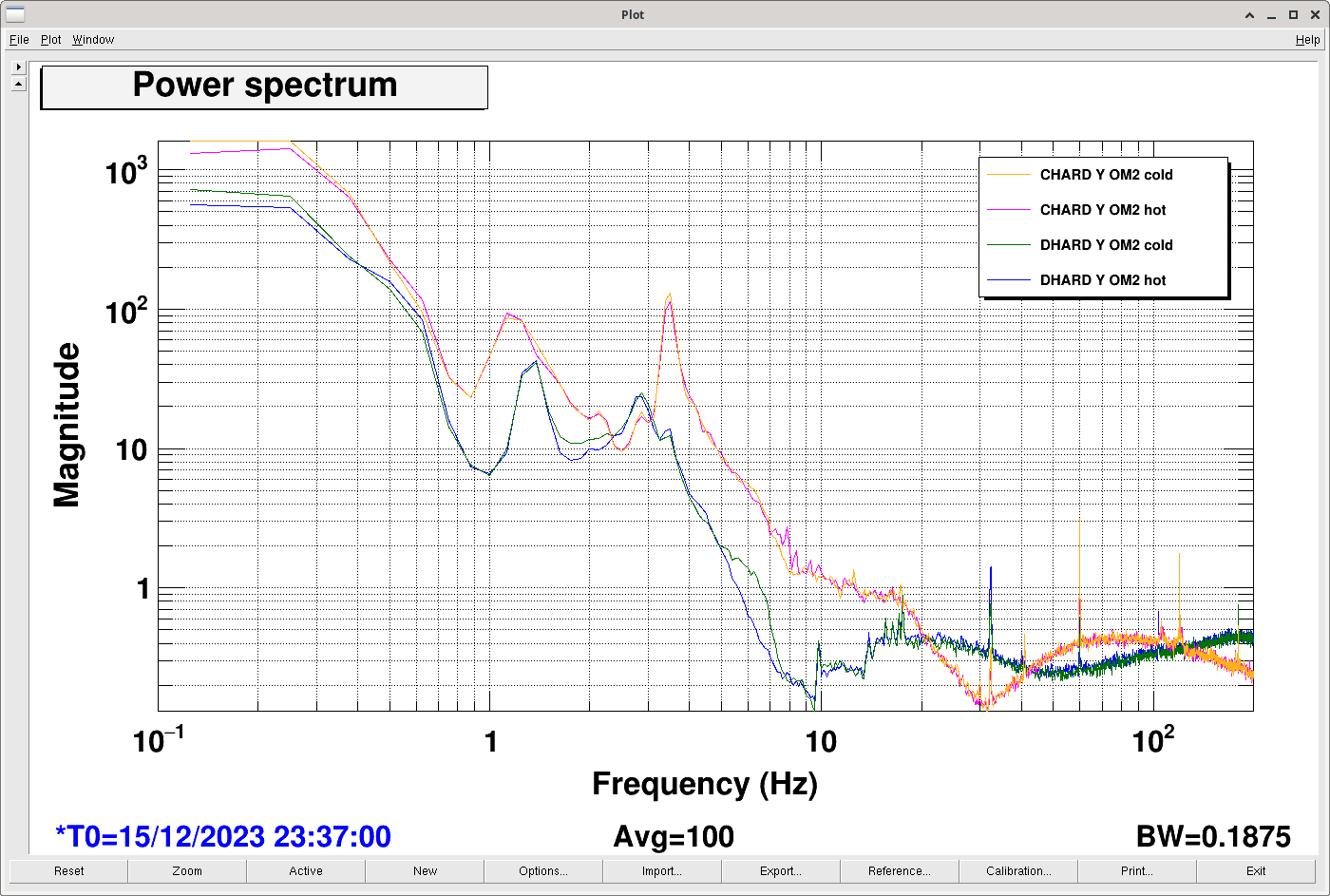
We followed up by checking ZM Sliders to see if there is misalignment with different PSAMS was a factor in addition to the mode mismatches from changing PSAMS. There seems to be a large static alignment shift from changing PSAMS, we're not sure if it is fully compensated by ASC especially in yaw. We might do more measurements tomorrow to follow up.
| Squeezing | ZM4/ZM5 Voltage | Demod Phase (deg) | ZM4 P | ZM4 Y | ZM5 P | ZM5 Y | ZM6 P | ZM6 Y |
| +Mid SQZ | 120/120 | +200 | -41 | 255 | -176 | 339 | 780 | 805 |
| +Mid SQZ | 200/200 | +200 | -9.5 | 254 | -241 | 439 | 807* | 801* |
| -Mid SQZ | 120/120 | +32 | -12 | 257 | -176 | 351 | 753 | 793 |
| -Mid SQZ | 200/200 | +32 | -9.6 | 254 | -244 | 450 | 792 | 790 |
| ASQZ | 120/120 | +242 | -41 | 257 | -165 | 343 | 765 | 792 |
| ASQZ | 200/200 | +242 | -9.55 | 254 | -238 | 439 | 843 | 787 |
| FDS | 120/120 | +150 | -41 | 257 | -177 | 391 | 756 | 797 |
| FDS | 200/200 | +150 | -9.48 | 254 | -244 | 446 | 800 | 789 |
*+Mid SQZ: ZM6 was not flat for the 200/200 squeezing. It was increasing in P and Y for +Mid SQZ, didn't seem to reach the steady state. It seems like the ASC is keeping up better with 120/120 because the angles converged, whereas the angles of ZM5 and ZM6 for the 200/200 case kept increasing and did not reach steady state in the time given.
ASQZ: ZM5 pitch for 120/120 has some shaking, ZM6 pitch is rising and yaw is dropping
Made another step up of +0.1W to 1.2W/Segment on ETMX and ETMY at 21:07UTC.
Plots attached of HOM, DARM and ndscopes. Jenne pointed out we should use GDS-CALIB for DARM as it isn't effected bt the calibration changing with the RH changes. On ndscopes, not that at -4hours theres a step in SQZ that effects the range 73446.
High frequency noise reduce, DARM maybe better in in the bucket but circulating power down 7kW and Kappa_C down 0.8%.
This doesn't seem to be doing anything bad to the range so we can leave the ETM Ring Heaters in this 1.2W setting for the weekend. If Operators have any troubles, they can reduce H1:TCS-{ETMY,ETMY}_RH_SET{UPPER,LOWER}POWER from 1.2W to 1.0W.
Adding plots of 11:00UTC,13h30 after ETM RH change. DARM ~1000Hz looks like it thermalized worse than 2 hours after the RH change. 6kHz DARM continued to reduce, but it started that lock particularly high. Circulating power settled at 367kW, 7kW less than nominal. KAPPA_C dropped nearly 1%.
These RH changes were reverted 16 October 2023 73503.