david.barker@LIGO.ORG - posted 10:10, Tuesday 05 September 2023 (72677)
Tue CP1 Fill
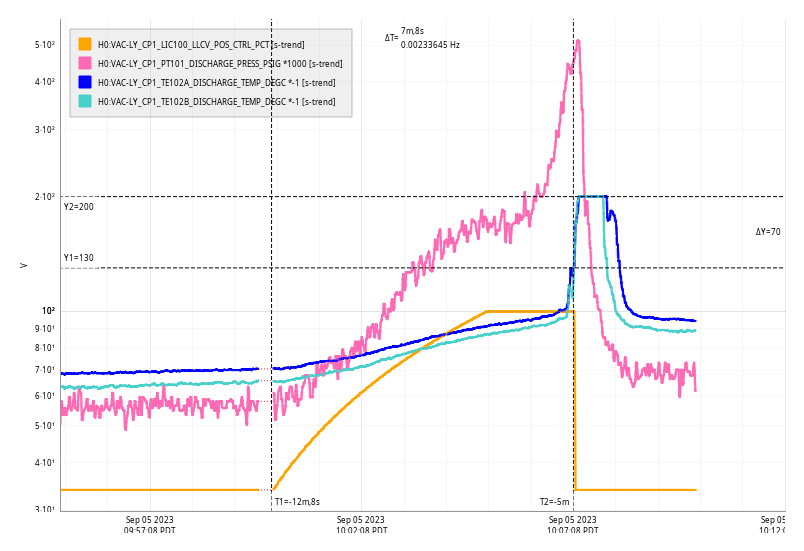
Tue Sep 05 10:07:08 2023 INFO: Fill completed in 7min 4secs
Images attached to this report
Tue Sep 05 10:07:08 2023 INFO: Fill completed in 7min 4secs
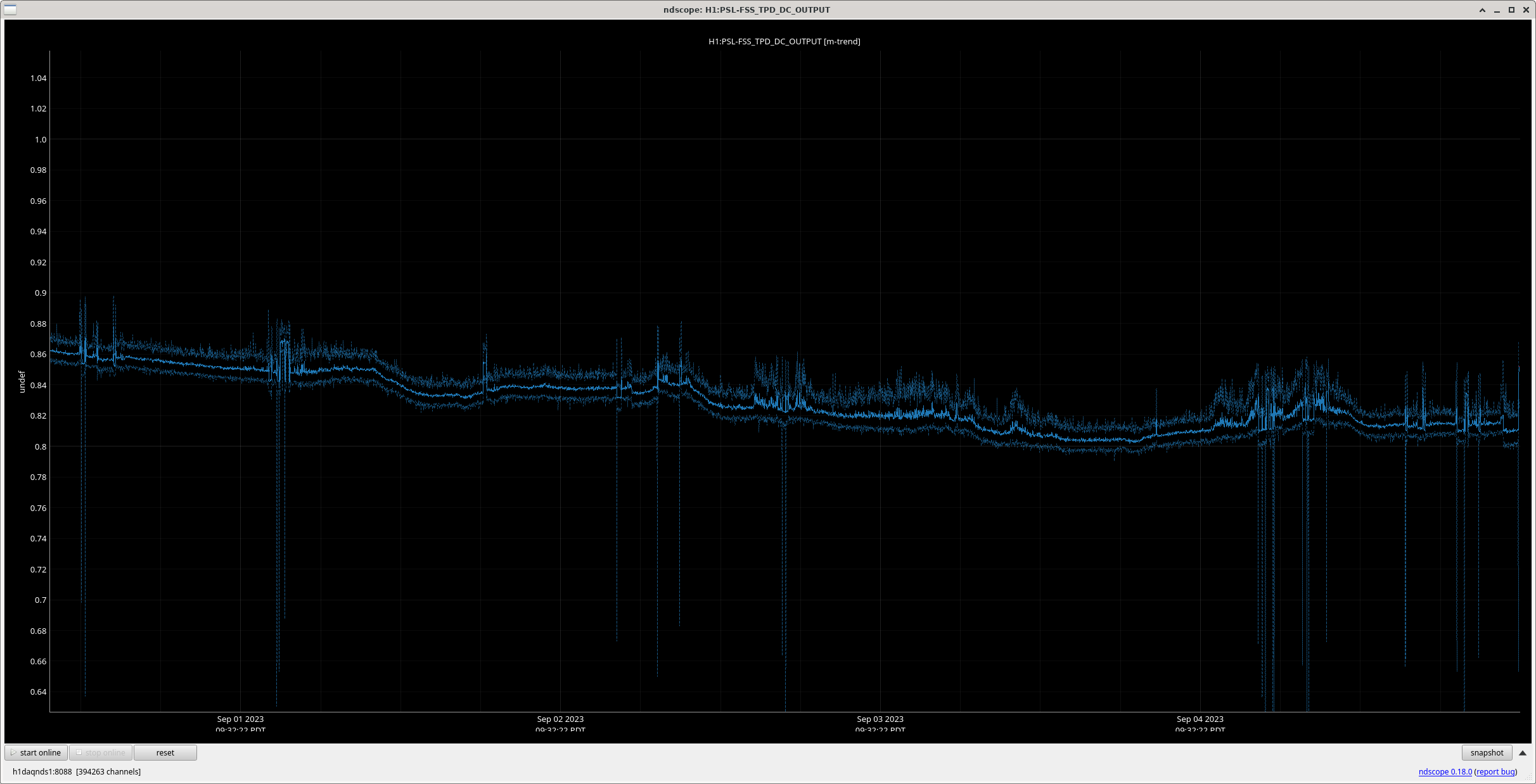
Looking over the PSL this morning, I noticed the RefCav TPD dropped from ~0.86V to ~0.8V over the Labor Day weekend (see attachment). Checked with the on-duty Operator to ensure no one was using the IMC (no one was), so we took it to offline and I remotely tweaked the beam alignment into the RefCav to attempt to recover some of the lost TPD signal. I was able to get the TPD up to ~0.885V with the IMC unlocked (~0.86V with the IMC locked, unsure why the difference). Will keep an eye on this, looks like we may need a PSL enclosure incursion sometime in the next couple weeks to adjust the FSS path alignment on table.
WP11409
A new h1hpiham1 model was installed on h1seih16, no DAQ restart was needed.
TITLE: 09/05 Day Shift: 15:00-23:00 UTC (08:00-16:00 PST), all times posted in UTC
STATE of H1: Preventive Maintenance
OUTGOING OPERATOR: Ryan C
CURRENT ENVIRONMENT:
SEI_ENV state: CALM
Wind: 3mph Gusts, 1mph 5min avg
Primary useism: 0.02 μm/s
Secondary useism: 0.13 μm/s
QUICK SUMMARY: PEM injections and SUS charge are finishing up, IFO locked for 45min. Maintenance about to start
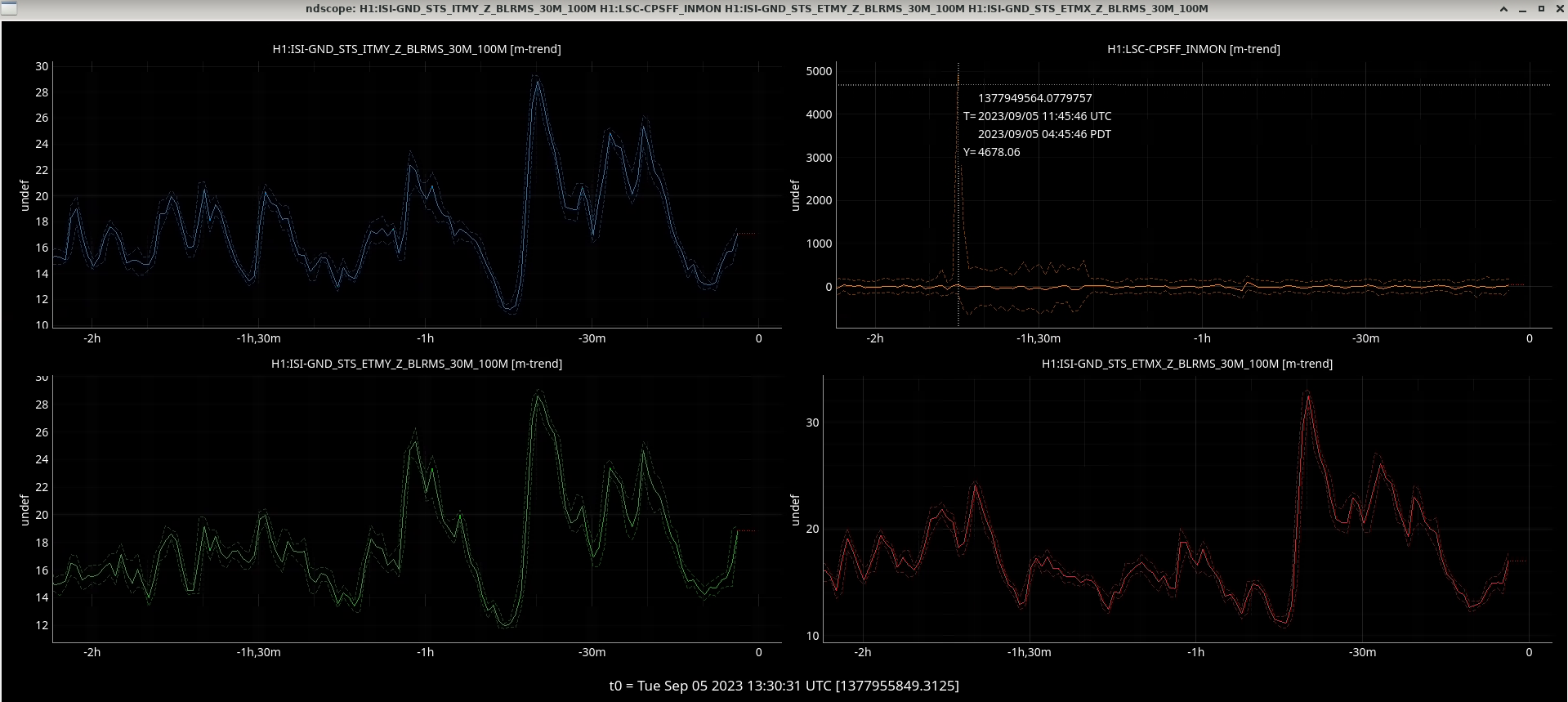
The ITMY ISI watchdog tripped, hasn't shown up on H1locklosses yet.
We're going through an initial alignment on the relock.
Reaquired NLN at 13:17, just waiting on the camera_servo
ITMY IST ST2 watchdog tripped at 13:21, not totally sure why. We lost lock 4 minutes later
These lock losses were caused by the ITMY capacitive position sensors glitching. See LHO:72683.
ITMY stage2 watchdog tripped and killed the lock, not sure why it tripped. Its the second time in a row that it's happened.
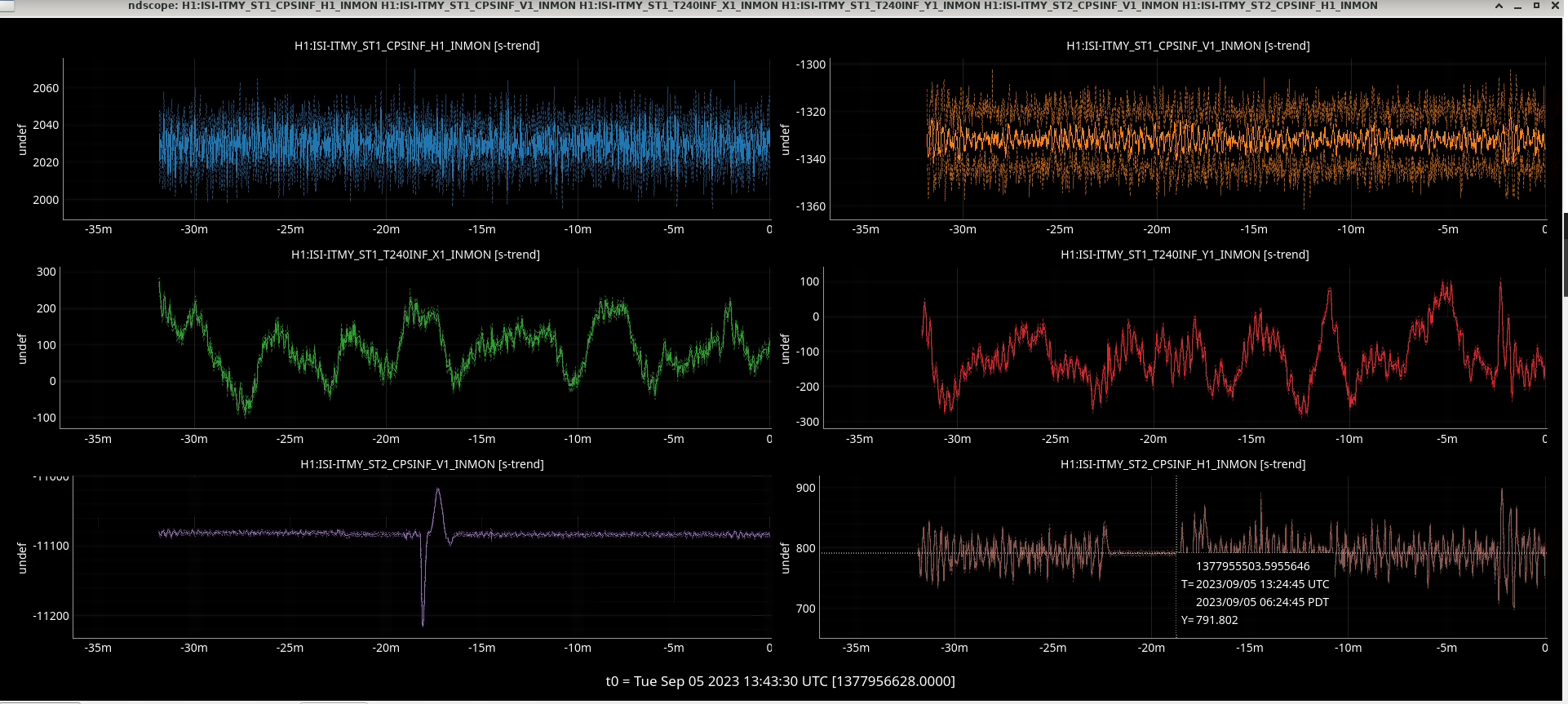
Reaquired NLN at 14:09UTC
These lock losses were caused by the ITMY capacitive position sensors glitching. See LHO:72683.
Workstations were updated and rebooted, including opslogin0 and the operator's workstations. This was an OS package upgrade. It did not include updates to the Conda environment except cdsws16 (in the back right of the CR) and zotws26 (Dave's workstation) have been updated to a new Conda environment.
This environment runs python 3.10 instead of python 3.9. Package changes are listed here:
https://git.ligo.org/cds/packaging/cds-conda-distribution/-/wikis/Environments#version-2023-09-04-01
Observing reaquired at 10:18
TITLE: 09/05 Eve Shift: 23:00-07:00 UTC (16:00-00:00 PST), all times posted in UTC
STATE of H1: Observing at 145Mpc
INCOMING OPERATOR: Ryan C
SHIFT SUMMARY:
IFO is in NLN and OBSERVING (as of 03:07 UTC, 4hr and 10 minute lock so far). See Midshift Update for details on this shift's two lock acquisitons (seperate lockloss alogs also linked within).
There has been nothing significant since last lock was acquired.
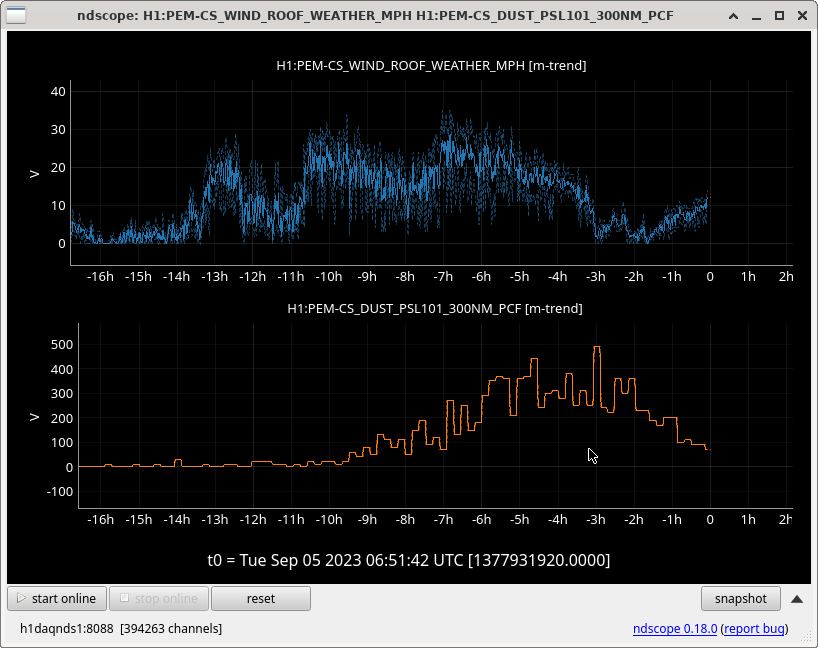
PSL Dust Monitor 101 levels are back to normal (scope of dust moving with CS reduced windspeeds below - you can see the dust "lagging" behind the wind as it settles).
LOG:
None
IFO is in NLN and OBSERVING as of 3:07 UTC
Locklosses (and lock acquisitions after Lockloss 00:12UTC)
Wind has been really high. We lost the first lock at 00:12UTC and then guardian lost lock 6 more times while relocking from:
1. DRMI at 0:33 UTC
2. Locking ALS at 0:35 UTC
3. Locking ALS at 0:37 UTC
4. Find IR at 0:40 UTC
5. Locking ALS at 00:42 UTC
6. Locking ALS at 00:44 UTC
As my lockloss alog 00:12UTC said, I think this was most certainly from the wind, given regular gusts nearing 40 hitting MX, EX. Seeing this, I put IFO in down at 00:45 UTC until I could see the wind speed go lower (and put the obs mode as wind). After 15 minutes, it seemed that the wind speed highs were about 10mph lower. I then tried to re-lock again at 1:02UTC. I don't think that this is/was an issue with locking at all because guardian went through the states quickly and as expected only to fail right as a 35+mph gust hits (looking at H1PEM_WEATHER_WIND) so I reckon that alignment is fine, but just getting bumped by particularly acute wind gusts. This behavior tracks with Ton'y lockloss 20:53 alog earlier today.
Finally, I managed to reach NLN at 1:42UTC and Observing at 1:58UTC (the wind speeds were about 20mph across the stations at this time).
We were observing for all of about one minute before we lost lock again - this may have been caused by wind or a 5.7 Fiji EQ though neither cause is terribly convincing given lower wind speeds and low magnitude.
Lockloss at 2:01 UTC. Relocking again...
Reached second NLN at 2:50 UTC and Observing at 3:07 UTC (wind speeds have calmed down a lot now - hopefully we can hold this lock).
Other:
PSL Dust Monitor_101 is giving the RED alarm. I acknowledged it and tried to investigate by looking at the PEM PSL screen, but and seems that this is going up with the wind (screenshot at 1:33 UTC below). It is not far above the red threshold and occasionally goes from yellow to red and back. It seems that the dust peaked at 443 cts and is now at 280 (second screenshot at 3:00 UTC below). It seems to be going down with the wind as well.
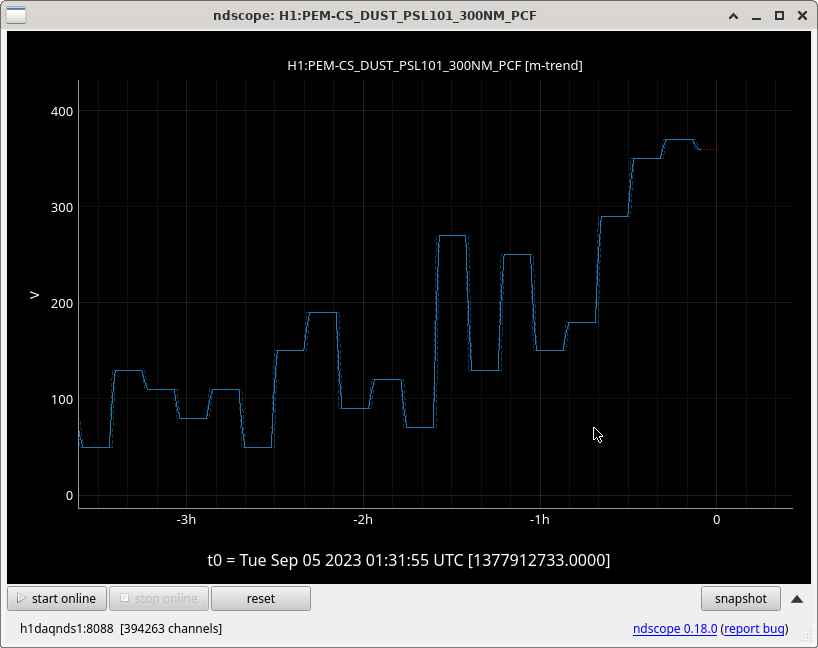
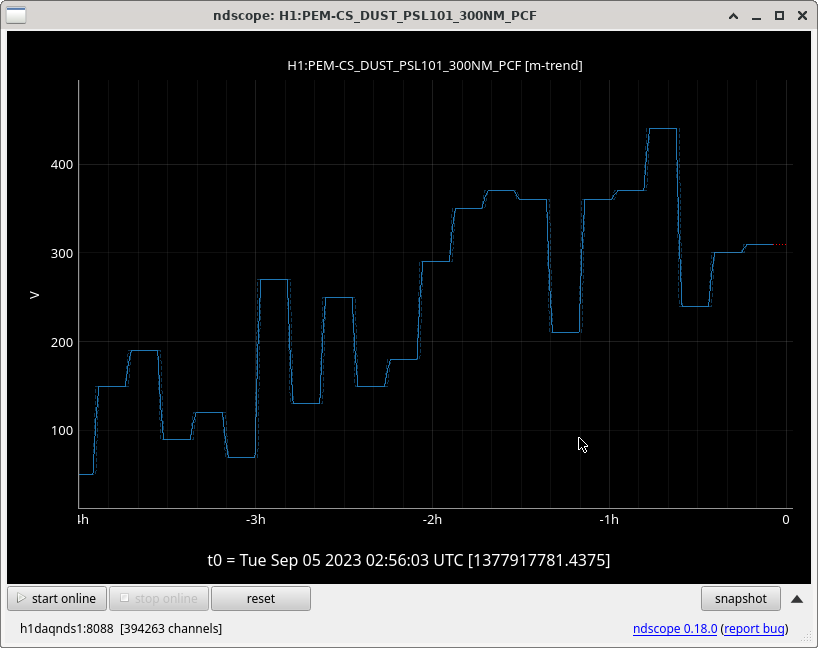
Lockloss after being in observing for one minute only. This also happened 1 minute after guardian automatically reached "Seismic to CALM".
DRMI Unlocked causing a lockloss to a 1:25 hr lock. Looks like it happened during (and due to) a ~37ish mph wind gust (same as previous lockloss).
Potentially relevant: PSL dust monitor 101 is also giving the first (yellow) warning alarm.
Vicky and I went to SQZT7 while calibration work was happening, to follow up on some of our observations from 72525 (and Vicky's comment).
Polarization issue:
With the seed dither locked, we placed a PBS before the half wave plate in the homodyne sqz path and measured 67.2uW transmitted (vertical pol) and 750uW reflected (horizontal) (817uW total, 8% in the wrong polarization, 16.5 degrees polarization rotation). After the half wave plate we measured 5.48uW transmission through the PBS (vertical) and 802uW reflected (horizontal) ( 807uW total, 0.7% in the wrong polarization, polarization less than 5 degrees away from horizontal). We also placed the PBS right at the bottom of the periscope, and there measured 70uW transmitted and 820uW before the PBS was inserted (8.5% in the wrong polarization, 17 degrees polarization rotation away from horizontal). This would not limit the squeezing measured on the homodyne since we are able to correct it with the HWP, but measuring the same polarization rotation at the bottom of the periscope suggests that the beam could be coming out of HAM7 with this polarization error, which would look like an 8% loss to the squeezing level in the IFO.
In Sept 2022, during the vent for the OM2 swap, we measured the throughput of the seed beam from HAM7 to HAM6 65110, which agreed well with the only loss between HAM7 and HAM6 being the 65.6% reflectivity of SRM, and suggests that there was not an 8% loss in the OFI at that time.
Loss on SQZT7 (not bad):
Comparing the total power measurements here, we have 820uW at the bottom of the periscope, and 807uW measured right before the homodyne, so we have something like 1.6% loss on SQZT7 optics (small compared to the type of loss we need to explain our squeezing level).
Seed transmitted power over reflected power ratio has dropped:
We also measured the seed power reflected from the OPO, so that we could compare the ratio of transmitted to reflected seed measured at the time of the squeezer installation in HAM7 in Feb 2022: 61904 (3.9% trans/refl). Today we saw 0.82mW seed transmitted, and 27mW of reflected seed at the bottom of the periscopes (3.03% trans/refl). This is 78% of the ratio measured at installation. Because this seems like a large drop, we repeated the measurement twice more, and got 3% each time. We also checked that the dither lock is locking at the maximum seed transmission.
Homodyne PD QE check (QE of PDB might be low):
We used an Ophir which was calibrated in 2018 to measure the LO power onto the homodyne PDs, the filter and head are SN 889882 and the controller is SN 889428. For PDA we saw 0.6mW, for PDB we saw 0.63mW.
Both the PDs are calibrated into mA in the front end, which includes anti-gain of gain(0.25)gain(0.22027), transimpedance of 0.001 (1kOhm), two anti-whitening filters (and cnts2V and mA factors). For PDA there is a fudge factor in the filter gain, if we divide this out, the readback is that the PDA photocurrent was 0.512mA, and 0.5126mA for PDB (with a drift of 0.5% over the measurement time). This gives a responsivity of 0.855A/W for PDA and 0.813A/W for PDB. For QE of 1, the responsivity would be e lambda/(h c) = 0.8582 A/W, so our measurement is 99.6% QE of PDA, and 95% QE for PDB. (See Vicky measured higher reflection off PDB than PDA in 63893 and Haocuns' measurement in 43452).
Above I mixed up vertical and horizontal polarization. The LO beam arriving at the homodyne is vertically polarized, as well as the seed beam coming out of the chamber.
Revisiting old alogs about the seed refl/trans (throughput) measurement:
In the first installation Feb 2022, The refl/trans ratio was measured as 4% Feb 24th 61904, and the ratio of IR trans arriving on SQZT7 to right after the OPO was 95% measured Feb 10th 61698
When the CLF fiber was swapped this measurement was redone: 64272 There we didn't measure CLF refl, but combining the measurements of 37mW out of fiber and 8mW rejected we can expect 29mW CLF refl. With 0.81mW reaching HAM7 this was a 2.8% ratio of refl/trans. This is worse than at the inital installation but similar to what Vicky and I measured last week. But, this alog also indicated 95% transmission from right out of the OPO to SQZT7. So this second measurement is consistent with the one we made last week, and would indicate no excess losses in HAM7 compared to that time.
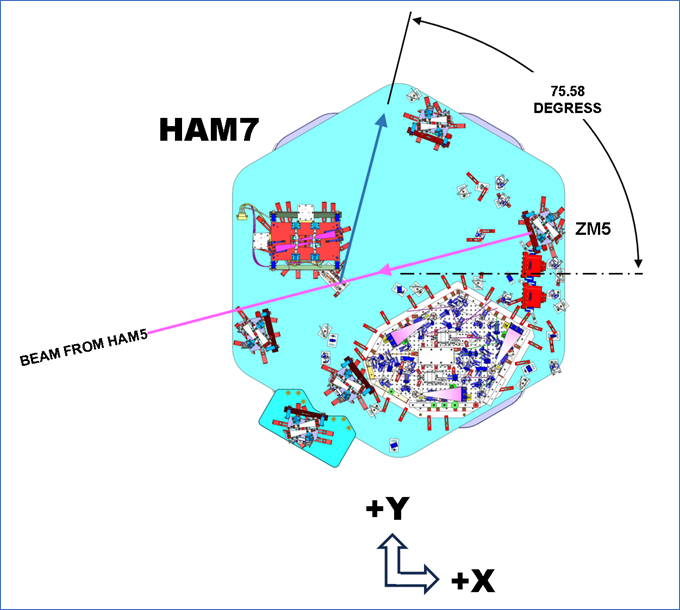
Polarization rotation is only an on-table problem for SQZT7, not an issue for IFO. It can be attributed to the SQZT7 persicope. To close the loop, see LHO:73537 for Don's latest CAD layout with the squeezer beam going to SQZT7 at a 14.4 degree angle (90-75.58) from +Y. SQZT7 periscope re-directs the beam to travel basically along +Y.
The nominal value of the squeezer laser diode current was change to 1.863 from 1.95. The tolerance is unchanged at 0.1. Looking at trends we sometimes read a value just below 1.85 leading to a failed laser condition which in turn triggers a relocking of the squeezer laser. However, since we are already locked, all we see is the fast and commen gains ramping down and up.
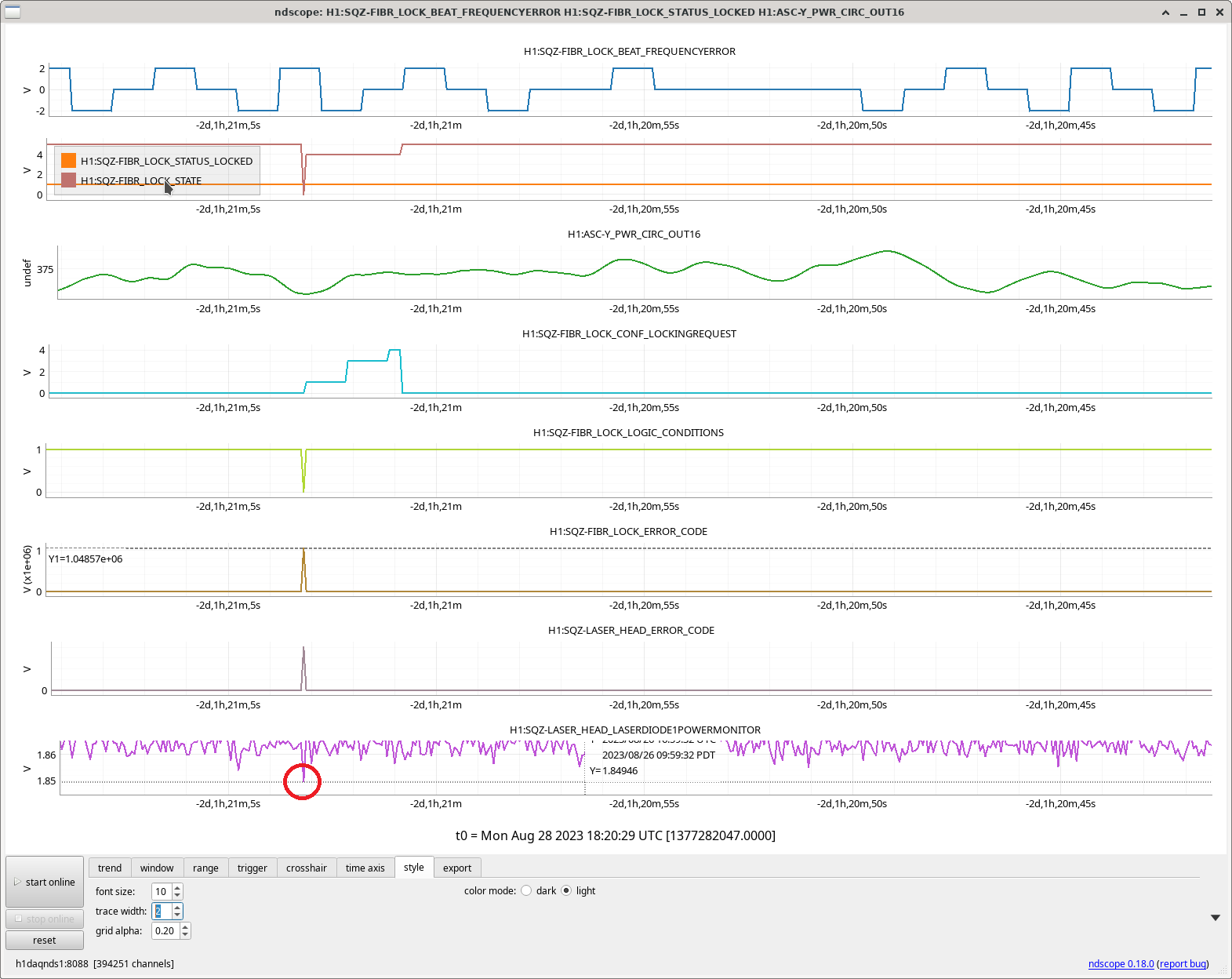
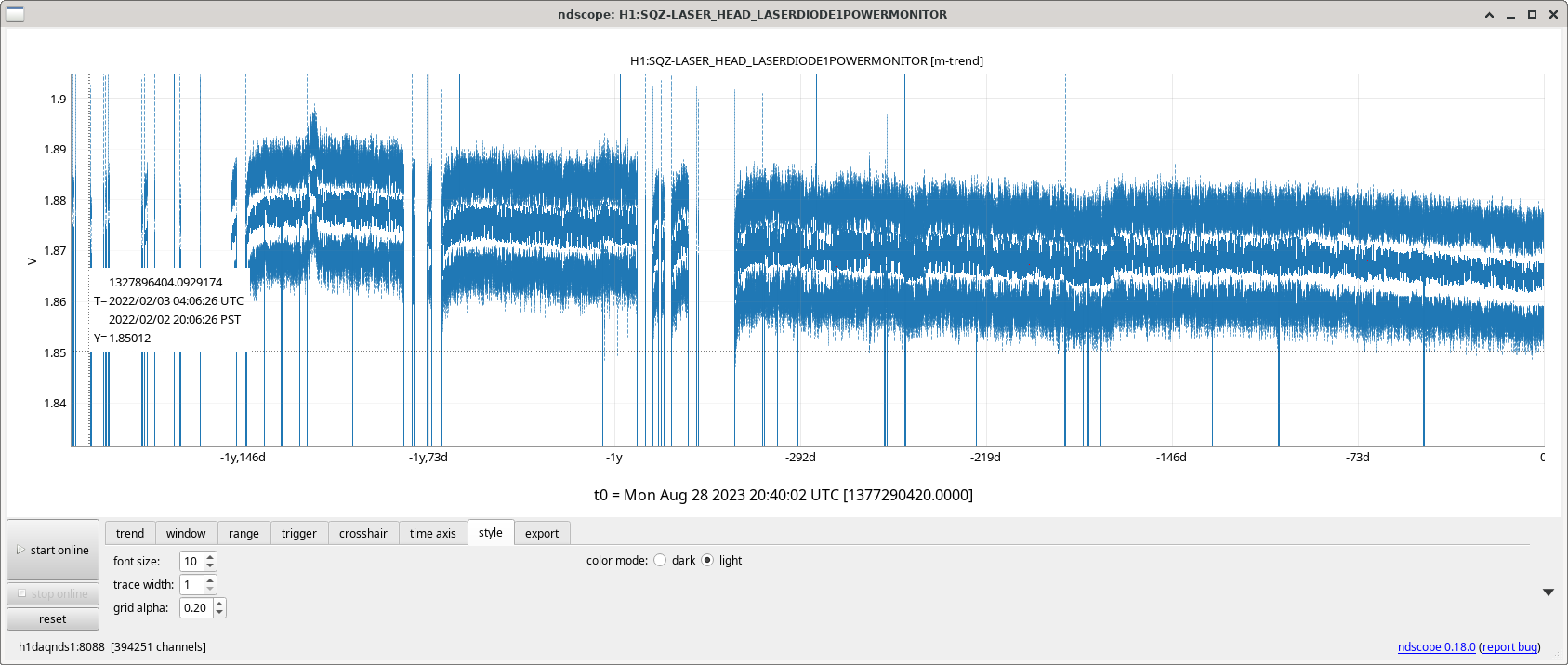
Looking at this diode current trend over the past 500 days, we see it fairly stable but trending down very slowly. It may have lost 10 mA over the past year. Resetting the nominal value should keep us in the good band for a while if this trend continues.
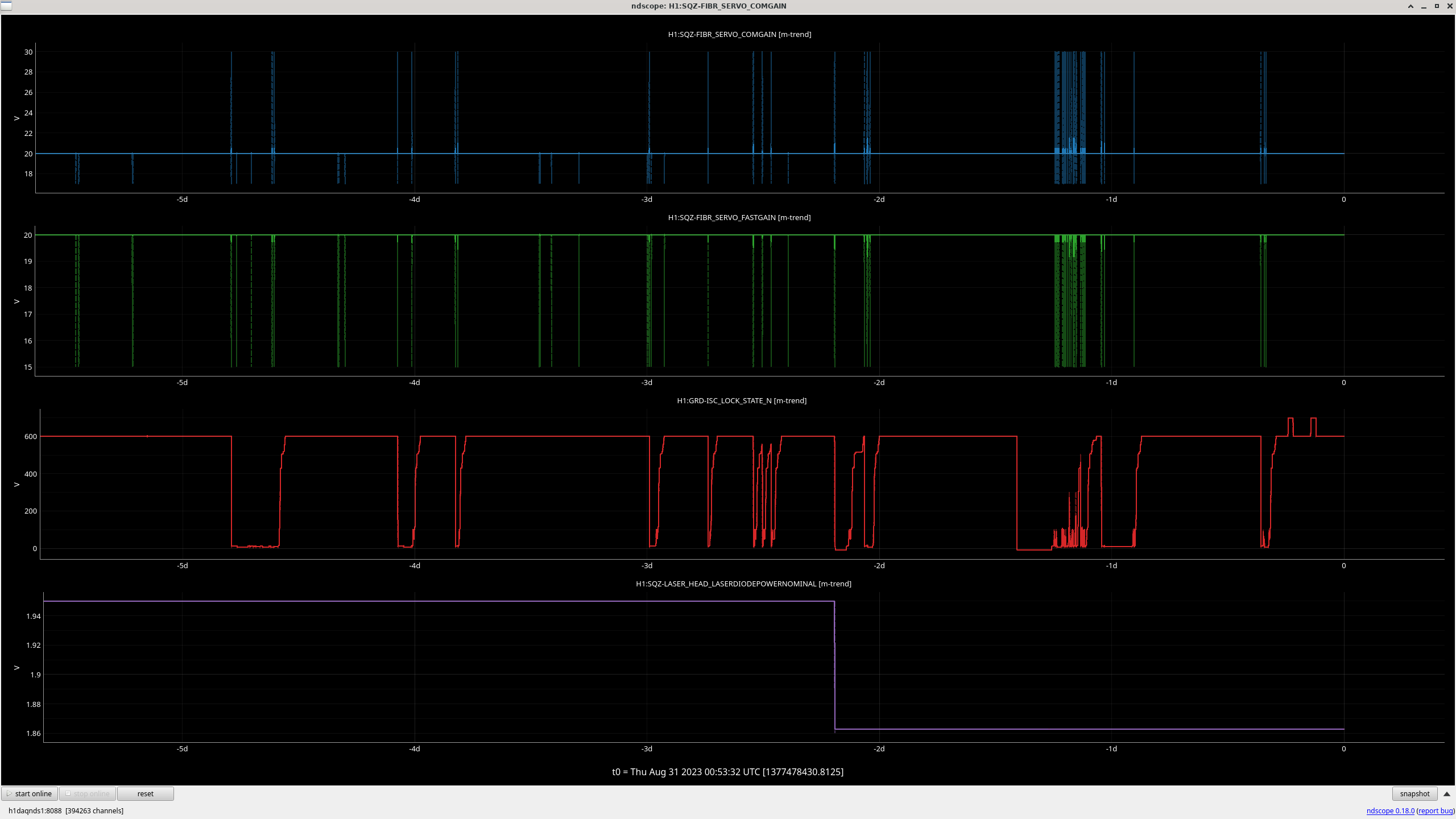
So far this seems to have fixed the TTFSS gain changing issue! Haven't seen gain changes while locked in the past couple days, since Daniel changed the laser diode nominal current (bottom purple trend).
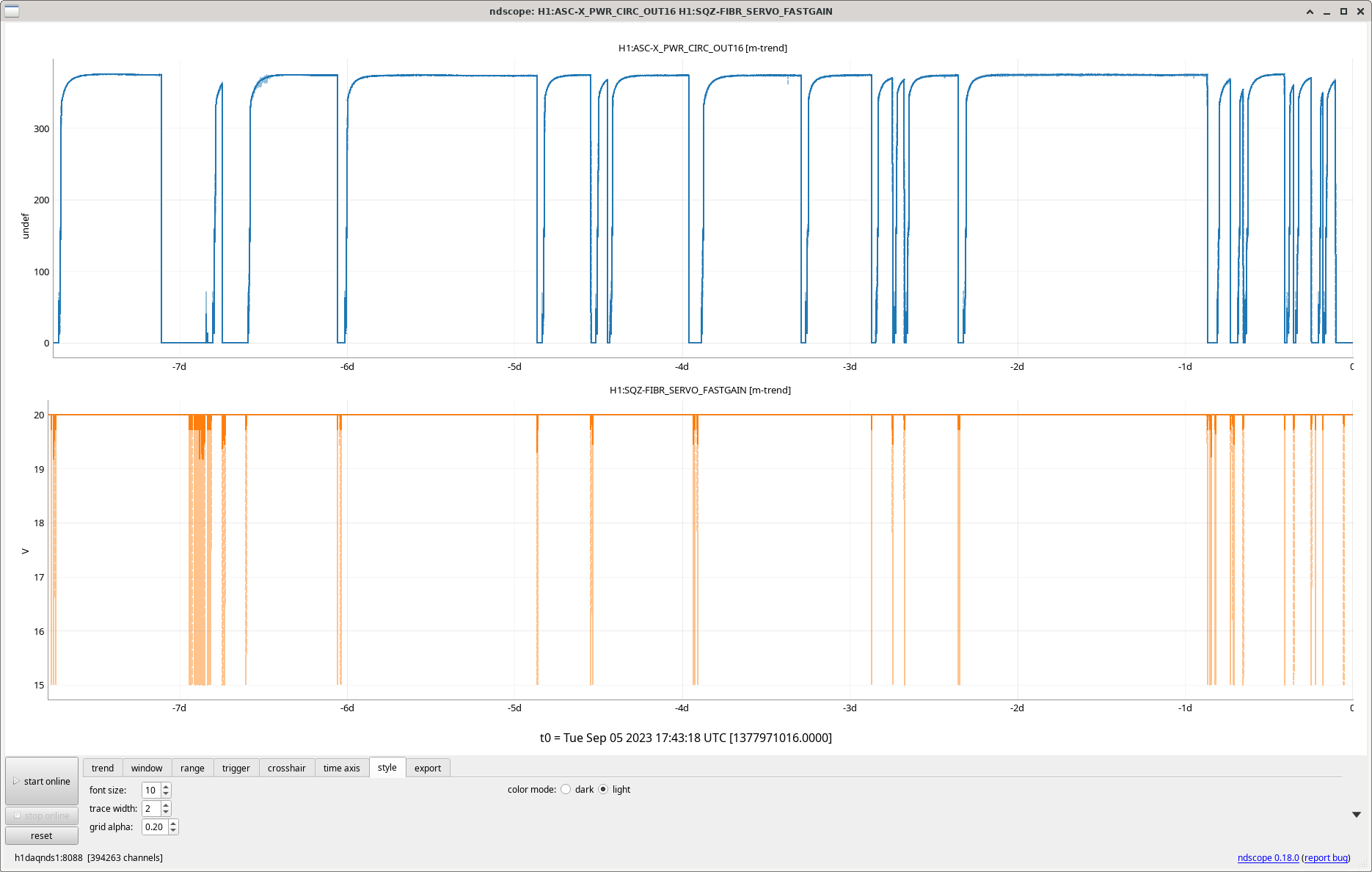
In the past week there wasn't single TTFSS gain ramping incident during lock. The fast and common gains are again monitored in SDF.
Camilla and I removed the auxillary laser from HAM7 this morning, but left the irseses in place.
Before removing the laser we noted that there was 0.25 NSUM counts on both OMC QPDs, with 21mW out of aux laser. This is with the laser current at 150 mA, and the OMC QPD sums were similar to last week.
We then switched to the squeezed beam from HAM7, using the OPO dither lock. We temporariy turned the power into the seed fiber (which has no fiber switch right now) to 77mW, and measured 1.18mW leaving HAM7 at the gate valve. We measured 0.78mW arriving at HAM6 before OM1, which agrees well with SRM transmission of 34.34%. We saw the SQZ beam on the OMC QPDs, 0.015 and 0.013 counts NSUM. (This is a slightly higer ratio of NSUM counts to measured power incident on OM1 than for the aux laser. Keita tell us this is not suprising since the aux laser beam size was large.
We wrapped the breadboard that the aux laser was on in foil and brought it to the optics lab, and Camilla turned the seed power back down.
The SRM transmission above was wrong, we have SRM06 which has a reflectivity of 32.34% according to E1700158 https://galaxy.ligo.caltech.edu/optics/
This means that our measurement above of 66% transmission from HAM7 to HAM6 indicates 97.6% transmission taking out the SRM transmission, which seems reasonable for two passes of the OFI with this kind of measurement accuracy.